
Recent News
Trends Reshaping the Food Distribution Industry
Introduction
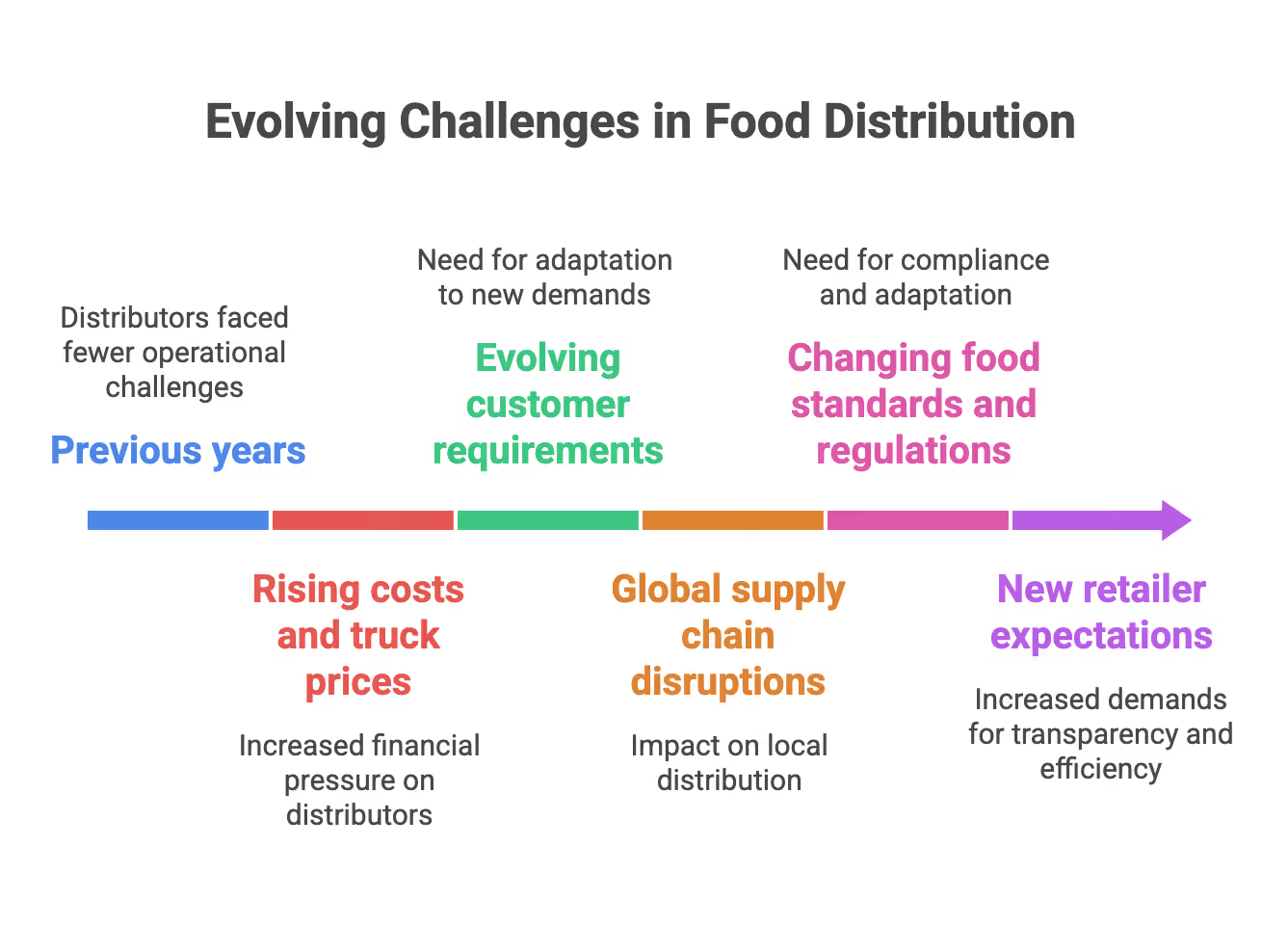
Many food and direct-store-delivery (DSD) distributors face greater operational challenges than in previous years. Costs are increasingly unpredictable, truck prices have risen, and customer requirements are evolving. Decisions about vehicle replacement and fleet budgeting now involve more uncertainty.
Much of this pressure comes from factors outside distributors’ control. Global supply chains, changing food standards, and new expectations from retailers, schools, and regulators are reshaping food distribution.
While these changes developed over time, they are collectively reshaping the operations of food distribution businesses today.
Global Issues Are Now Affecting Local Distribution
In the past, many food distribution businesses concentrated on local markets, relying on strong customer relationships, efficient routes, and disciplined operations.
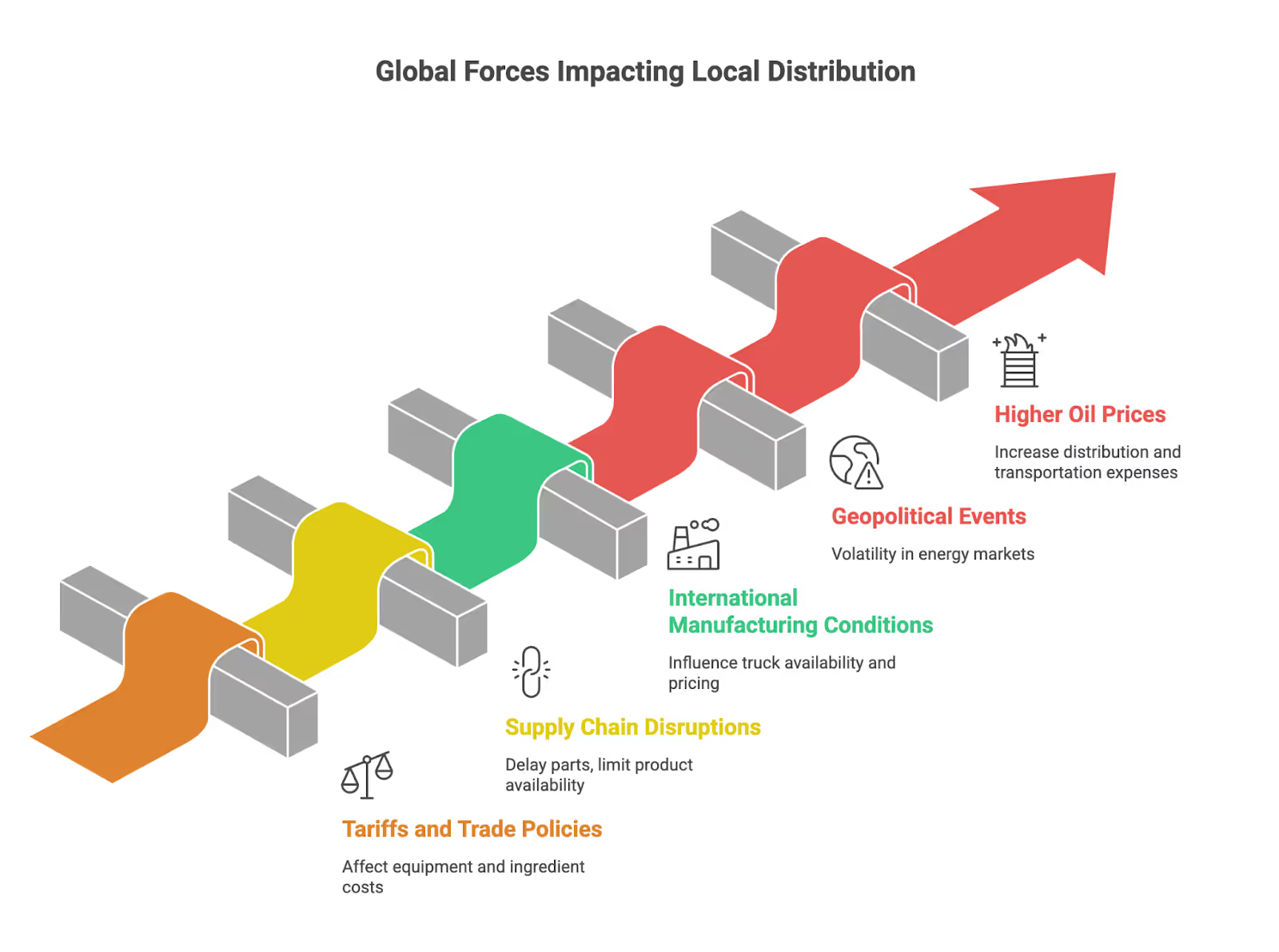
Today, global forces are having a much more direct impact on local distribution businesses. Tariffs and trade policies affect equipment and ingredient costs. Supply chain disruptions can delay parts or limit product availability. International manufacturing conditions and policy decisions also influence the availability and pricing of medium-duty trucks, which are essential for route delivery.
For distributors, this means that factors far outside their region can now shape everyday business decisions. A truck replacement may cost significantly more than expected. Certain equipment may take longer to arrive. Product costs may fluctuate due to changes that originate well beyond the local market.
In addition, geopolitical events can quickly ripple through the distribution industry. The ongoing conflict involving Iran has already caused volatility in global energy markets and raised concerns about disruptions to oil shipments. If tensions escalate, higher oil prices can quickly translate into higher diesel costs, directly increasing distribution and transportation expenses.
As a result, planning has become more complicated. Decisions that once depended mostly on local conditions now require distributors to keep an eye on broader economic and supply chain developments.
According to Mike Gardner, the VP of Product Development at Rich’s Ice Cream, proactive distributors will be better able to weather the storm.
“The food distribution and Direct Store Delivery industry is entering a period where change is coming from many directions at once—global supply chains, evolving food standards, fleet economics, and emerging technologies like AI.
Looking ahead at these critical industry trends is more important than ever.
Distributors who pay attention to these shifts and think proactively about how they will affect operations, costs, and customer expectations will be in a much stronger position to forecast the future and make smarter strategic decisions.
Our industry has always been built on adaptability, and understanding where the market is heading allows us to prepare rather than react. Conversations like this help all of us stay informed and better positioned for the road ahead.”
Michael Gardner
VP of Product Development at Rich's Ice Cream
A New Era of Accountability and Transparency
Another major shift affecting food distribution is the growing demand for transparency across the food industry.
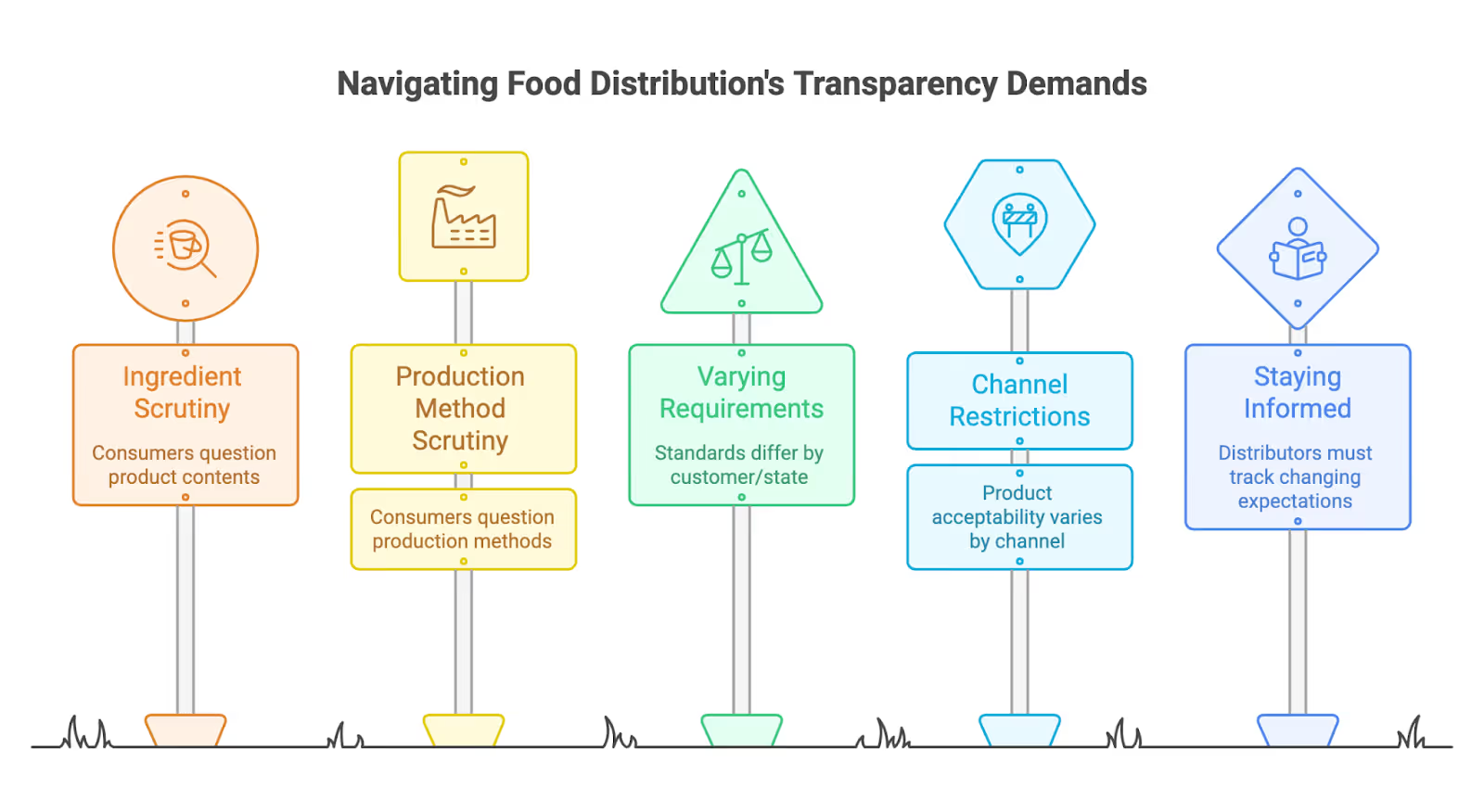
Consumers, advocacy groups, retailers, schools, and government agencies are increasingly questioning product contents and production methods. As a result, ingredient lists, nutrition standards, labeling, and food safety practices face greater scrutiny.
Often, these expectations begin with manufacturers or regulators, but their impact extends throughout the supply chain, including distributors.
For example, some school systems have begun restricting certain ingredients in cafeteria products. At the same time, there has been increasing attention on artificial food dyes, with several states considering restrictions and some manufacturers voluntarily reformulating products to remove synthetic colors.
Retailers are also introducing their own standards. Major chains have begun publishing lists of ingredients they no longer want used in certain private-label products, requiring manufacturers to reformulate recipes and update packaging.
This creates a complex operating environment for distributors. Requirements can vary by customer, state, or product type. A product acceptable in one channel may face restrictions in another.
As a result, distributors must stay informed about changing expectations while serving customers with diverse standards.
Fleet and Equipment Decisions Are Getting Harder
Transportation has always been one of the largest operational expenses for food distribution. Recently, managing a fleet has become more complicated.
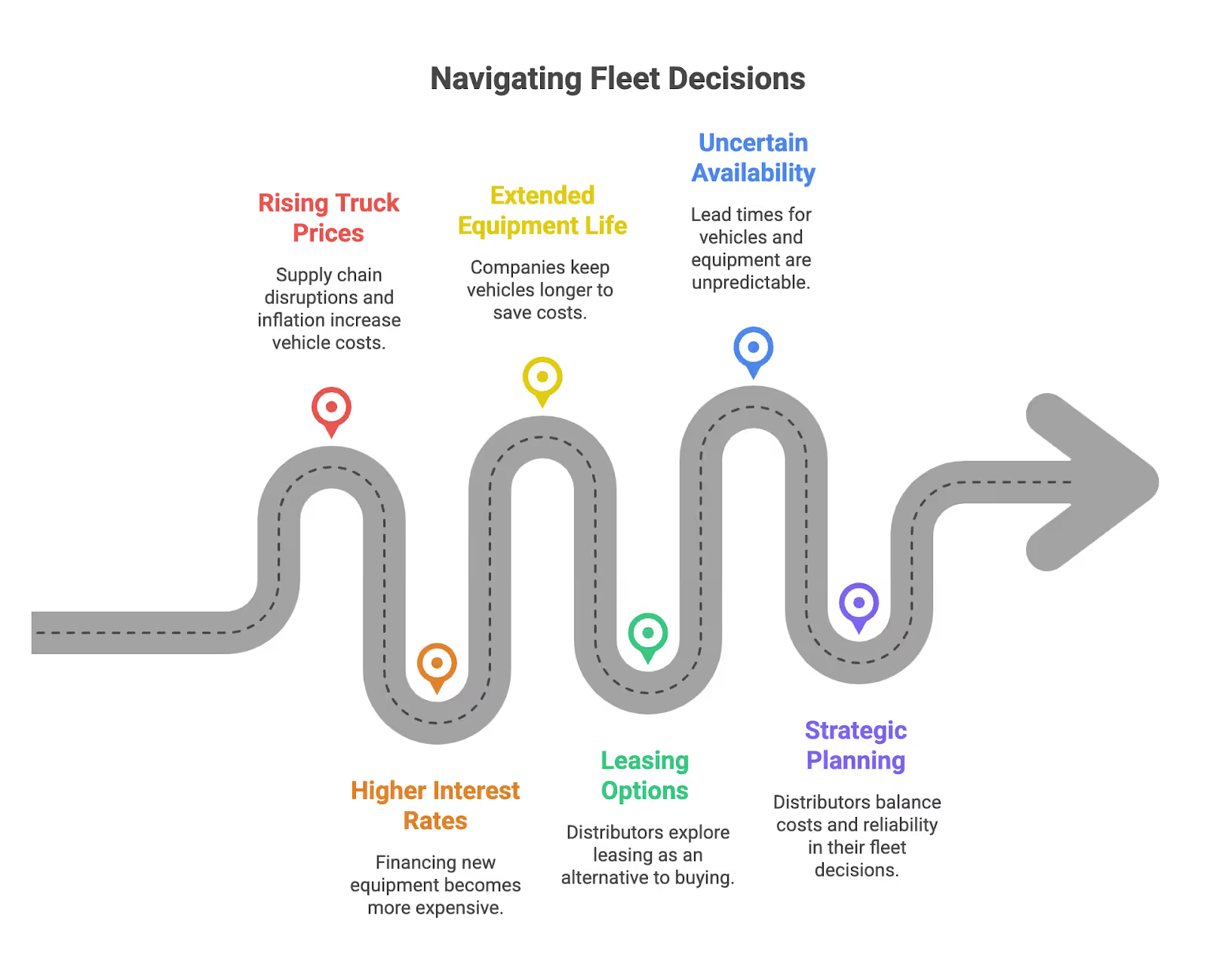
Truck prices have increased significantly due to supply chain disruptions, inflation, and tariffs affecting vehicle manufacturing and components. Higher interest rates have also made financing new equipment more costly.
These pressures are prompting many distributors to reconsider their fleet strategies. Previously, companies often followed predictable replacement cycles for vehicles. Now, some operators keep equipment longer, while others explore leasing or alternative financing.
Uncertainty about vehicle availability complicates planning. Lead times for some medium-duty trucks and specialized equipment may be longer than expected, making it harder to coordinate replacements with operational needs.
As a result, fleet planning is now a more strategic decision. Distributors must balance maintenance costs, capital investment, and operational reliability in a market where equipment pricing and availability can change rapidly.
The Growing Role of AI in Distribution
Another development beginning to influence distribution operations is the rapid advancement of artificial intelligence (AI). While AI is already transforming industries such as finance, retail, and marketing, its impact on logistics and distribution is only beginning to emerge.
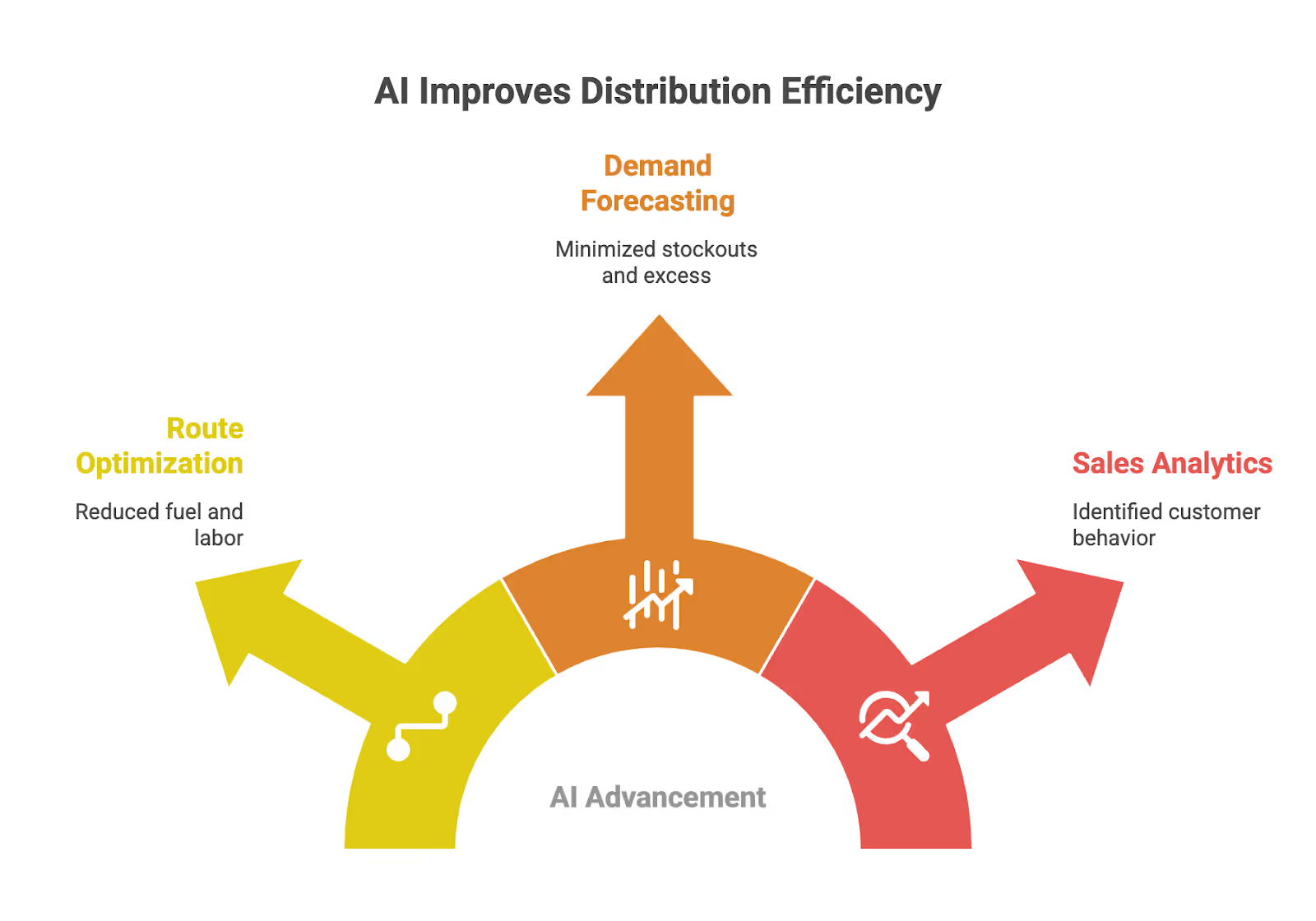
For distributors, AI has the potential to improve several aspects of day-to-day operations. Route planning, demand forecasting, inventory management, and pricing decisions are all areas where AI-driven tools can help analyze large volumes of data and identify patterns that may not be obvious through manual analysis.
In a Direct Store Delivery environment, even small improvements in efficiency can have a meaningful financial impact. Optimized routes can reduce fuel usage and labor costs. Better demand forecasting can help reduce out-of-stock situations and excess inventory. AI-assisted analytics may also help managers identify trends in sales performance, customer ordering behavior, or product movement across different territories.
At the same time, many distributors are still evaluating how and where AI fits into their operations. The technology is evolving quickly, and companies are exploring practical ways to apply it without disrupting existing workflows.
While AI will not replace the operational expertise and relationships that have always defined the distribution business, it is likely to become an increasingly valuable tool for companies looking to improve efficiency and adapt to a more complex industry environment.
Staying Ahead of Industry Changes
Many factors shaping the food distribution industry today are outside the direct control of individual distributors. Tariffs, global supply chain disruptions, evolving food standards, and shifting customer expectations are driven by broader economic and regulatory dynamics.
However, distributors can take proactive steps to address these changes.
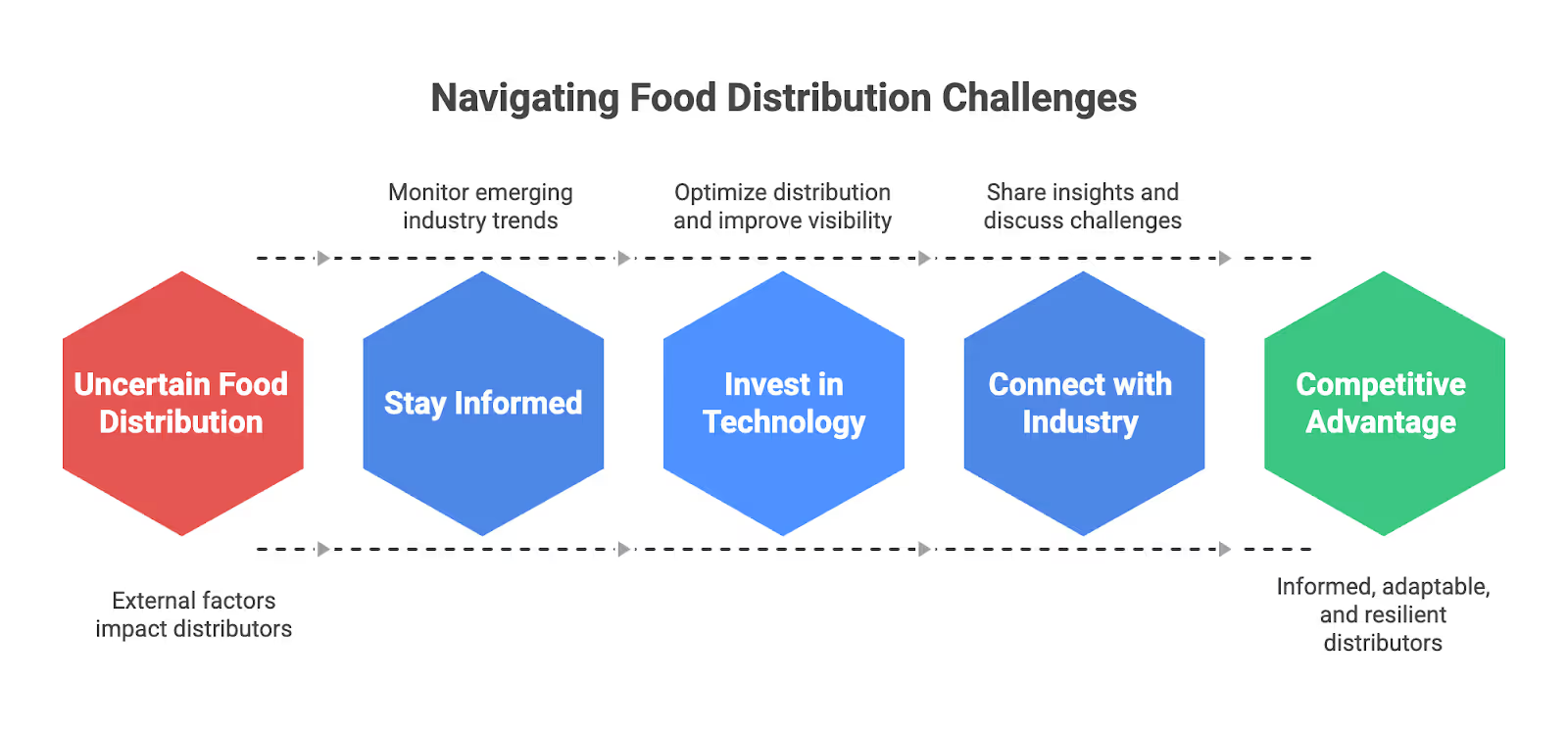
Successful operators stay informed about emerging trends and adjust their strategies. Many invest in technology to optimize distribution, improve operational visibility, and support better decision-making.
Distributors also benefit from staying connected with others in the industry. Trade associations, conferences, and peer groups offer opportunities to share insights, discuss challenges, and learn how others are adapting. Organizations such as The Ice Cream Association (TICA) bring distributors, manufacturers, and industry partners together to exchange ideas and strengthen the industry.
In a business environment that can sometimes feel uncertain, these conversations matter. Many distributors are facing similar pressures—from rising equipment costs to evolving product standards—and learning from one another can make it easier to navigate those challenges.
The food distribution industry has always demanded resilience and adaptability. Although the current environment is more complex, distributors who stay informed, adopt better tools, and refine operations will gain a clear competitive advantage.
That mindset, staying proactive and looking ahead rather than reacting, came up recently in our conversation with Michael Gardner. He summed it up with the perspective of hockey legend Wayne Gretzky:
“Wayne Gretzky was once asked by a reporter what makes him great. His answer was about three things:
- You’re only as good as your last game.
- You miss 100% of the shots you never take.
- I skate to where the puck is going to be, not where it has been.
Let’s be proactive and skate to where the puck is going!” - Michael Gardner
Success in today’s environment doesn’t happen in isolation. By connecting with peers, sharing insights, and engaging with industry groups like TICA, distributors can learn faster, adapt with confidence, and position themselves for long-term success.

Streamline Your DSD


.avif)
All Rights Reserved.