
Recent News
Beat the Heat: How Smart Distributors Prep for Summer
It's almost May. The warehouse is still quiet. Your drivers are handling manageable routes, your freezers are stocked at a comfortable level, and nobody's panicking yet. But if you've been in the distribution business for more than one summer, you already know what's coming.
Once Memorial Day arrives, everything picks up: stop counts climb, case loads grow heavier, new drivers need to find their footing, and the margin for error shrinks quickly. The distributors who handle that surge with confidence aren't the ones scrambling in June. They're the ones who use April and May to prepare.
In this article, we'll walk through five things smart distributors do before the heat hits, so when temperatures are on the rise, your operation doesn't freeze up.
Know Your Capacity Before Volume Hits
The first question to ask in April isn't "are we ready?" It's "what broke down last summer?" Pull up your route data from June, July, and August. Where did stop counts become unmanageable? Which routes consistently ran long, pushed drivers into overtime, or ended with missed stops? Those aren't just bad days; they're signals that your capacity didn't align with your peak demand.
Now is the time to act on those signals. That might mean rebalancing stops across routes, adjusting start times, or splitting a route that's grown too large for a single driver to handle efficiently. It's much easier to make those changes in May, when there's breathing room, than in the middle of a July heat wave, when every driver and every truck is already stretched.
A few things to review before the season kicks off:
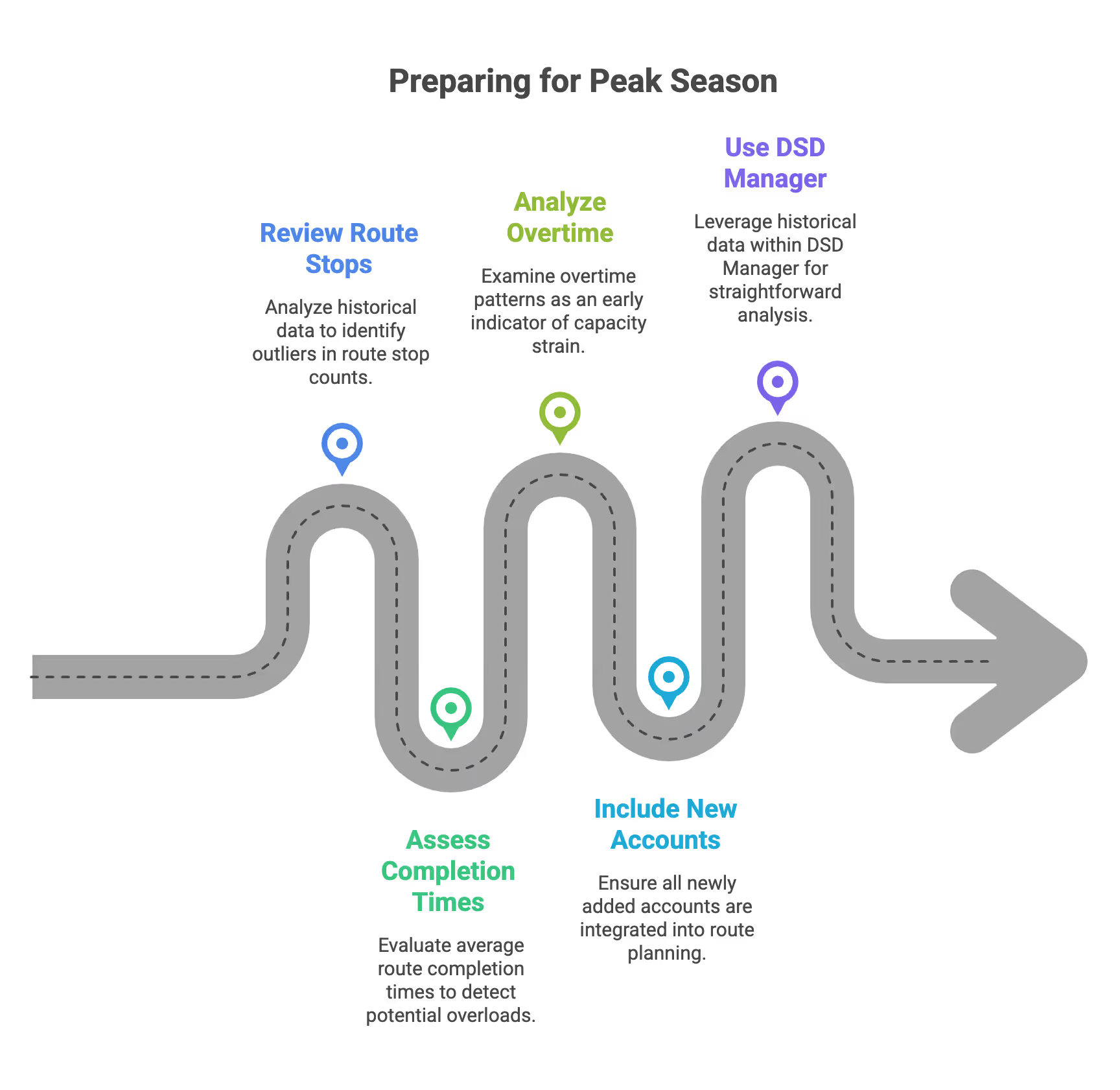
- Route stop counts from your peak weeks last year — look for outliers
- Average route completion times — if drivers were regularly running late, the route may be overloaded
- Overtime patterns — a useful early indicator that capacity is being strained
- Any accounts added since last summer that haven't been included in route planning
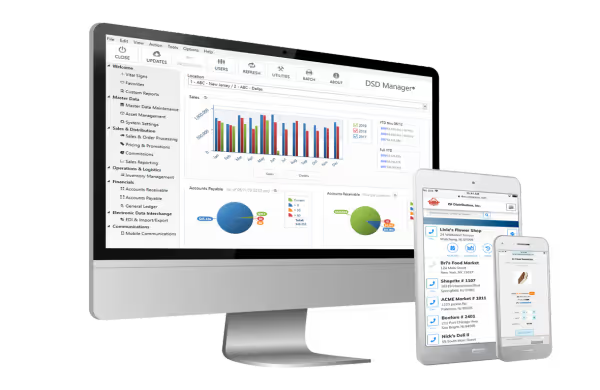
If you're running DSD Manager, your historical route data is already available. A quick look back at last summer's performance reports can make this analysis straightforward and provide the hard numbers to support any route changes you want to make before Memorial Day.
Get Your Asset Inventory in Order
Winter and summer are almost opposite seasons for frozen novelty distributors, not just in temperature, but in what sells. The products that carried you through the colder months may not be the ones flying off the trucks in July. Before summer demand kicks in, it's worth conducting a deliberate audit of what's in your freezers and planning store resets to shift your accounts from a winter mix to a summer-ready one.
Start by identifying slow-moving winter products that have been sitting on the shelf. Carrying the wrong inventory into peak season ties up freezer space you'll need for high-velocity summer items and increases the risk of waste and spoilage. Clearing it out now, whether through promotions, markdowns, or adjusted ordering, frees you to stock what actually sells when the weather heats up.
Then turn your attention to your summer staples. Think through which products historically drive your highest volume in June, July, and August — novelties, impulse items, and family packs — and make sure you're positioned to have enough on hand. Supply constraints can tighten as the season approaches, so getting your ordering in order before the rush is smarter than scrambling for product in late May.
This is also where store resets become critical. A reset is your chance to physically reorganize each account's freezer space, pull slow movers, reposition summer SKUs at eye level, and ensure the planogram reflects what customers will actually reach for in July. When done well, a reset turns a freezer optimized for winter purchases into one engineered for summer impulse buys. Done poorly or not at all, you're leaving sales on the table at every stop. Many of our customers use our DSD Mobile app to execute resets directly in the field, capture before-and-after photos, and sync changes back to the office in real time.
A few things to check off before the season starts:
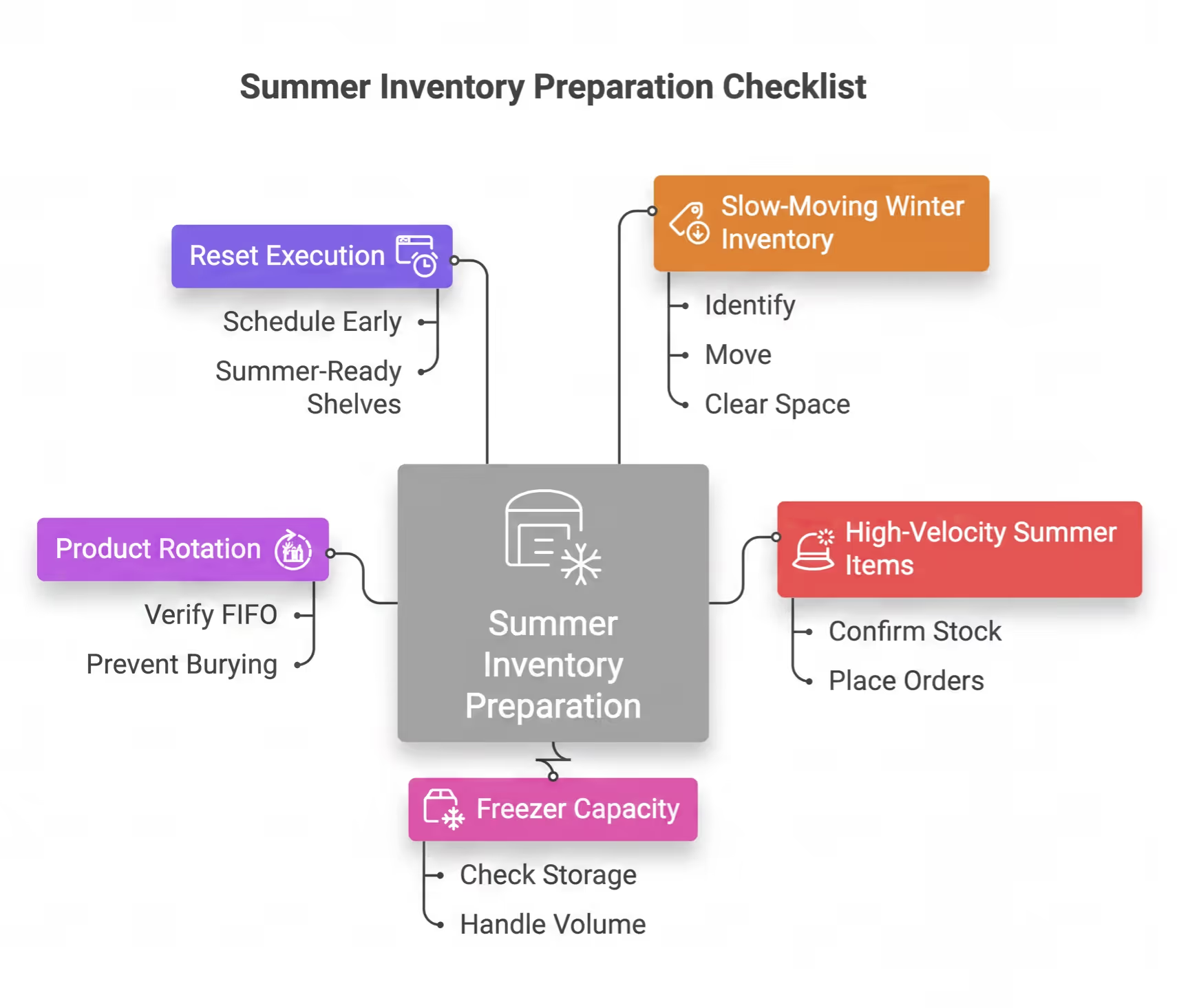
- Slow-moving winter inventory — identify it, move it, and clear the space through targeted store resets
- High-velocity summer items — confirm you're stocked and that orders are in place
- Freezer capacity — make sure your storage can handle the increased inbound volume
- Reset execution — schedule account-level resets early so your shelves are summer-ready before peak demand hits
Getting your inventory right before summer isn't just about having enough product. It's about ensuring the right product is in the right place at the right time, so your drivers aren't showing up at stops empty-handed during your busiest weeks.
Make Sure Your Drivers Are Ready to Run
Your routes can be perfectly balanced and your freezers fully stocked, but if your drivers aren't ready, summer will still challenge you. This is especially true when you bring on seasonal help, which most distributors do. A new driver unfamiliar with your stops, customers, or systems is a liability in April. By Memorial Day, you need them to be an asset.
Start with the basics: make sure every driver, new and returning, knows the playbook. That includes route assignments, delivery expectations, customer relationships, and handling exceptions such as missed deliveries, damaged products, or customers who want to make changes at the stop.
For seasonal drivers, handheld and mobile device training deserves special attention. Drivers often move quickly, work in the heat, and process transactions at every stop. A driver who isn't comfortable with their handheld device slows everything down: invoicing takes longer, errors creep into orders, and end-of-day settlement becomes a headache for everyone. Don't assume new hires will figure it out on the fly. Build device training into your onboarding process and give drivers a chance to practice before they're on a live route.
A few areas to cover in pre-season driver prep:
- Route familiarity — walk new drivers through their stops before day one
- Handheld device training — invoicing, order adjustments, and returns at the stop
- Customer expectations — accounts with special instructions or delivery preferences
- Exception handling — what to do when something goes wrong at a stop
- Check-in and communication — how drivers should report issues to the office in real time
The goal is simple: by the time the first real heat wave hits, your drivers should feel confident, and your operation should run seamlessly. That confidence doesn't happen by accident; it comes from building it in May.
Set Up Your Reporting Before You Need It
Here's a scenario that plays out too often: volume spikes in June, and something starts going sideways. A route underperforms, a key account's orders slip, settlement numbers don't add up, and the manager trying to diagnose the problem realizes they don't have the reporting in place to find the answer quickly. Don't let that be you.
April and May are the right time to ensure your reporting is configured and ready before transaction volume climbs. That means knowing which dashboards and reports you'll rely on during the season and verifying they're set up to deliver the information you need, when you need it.
A few reporting areas worth prioritizing before summer:
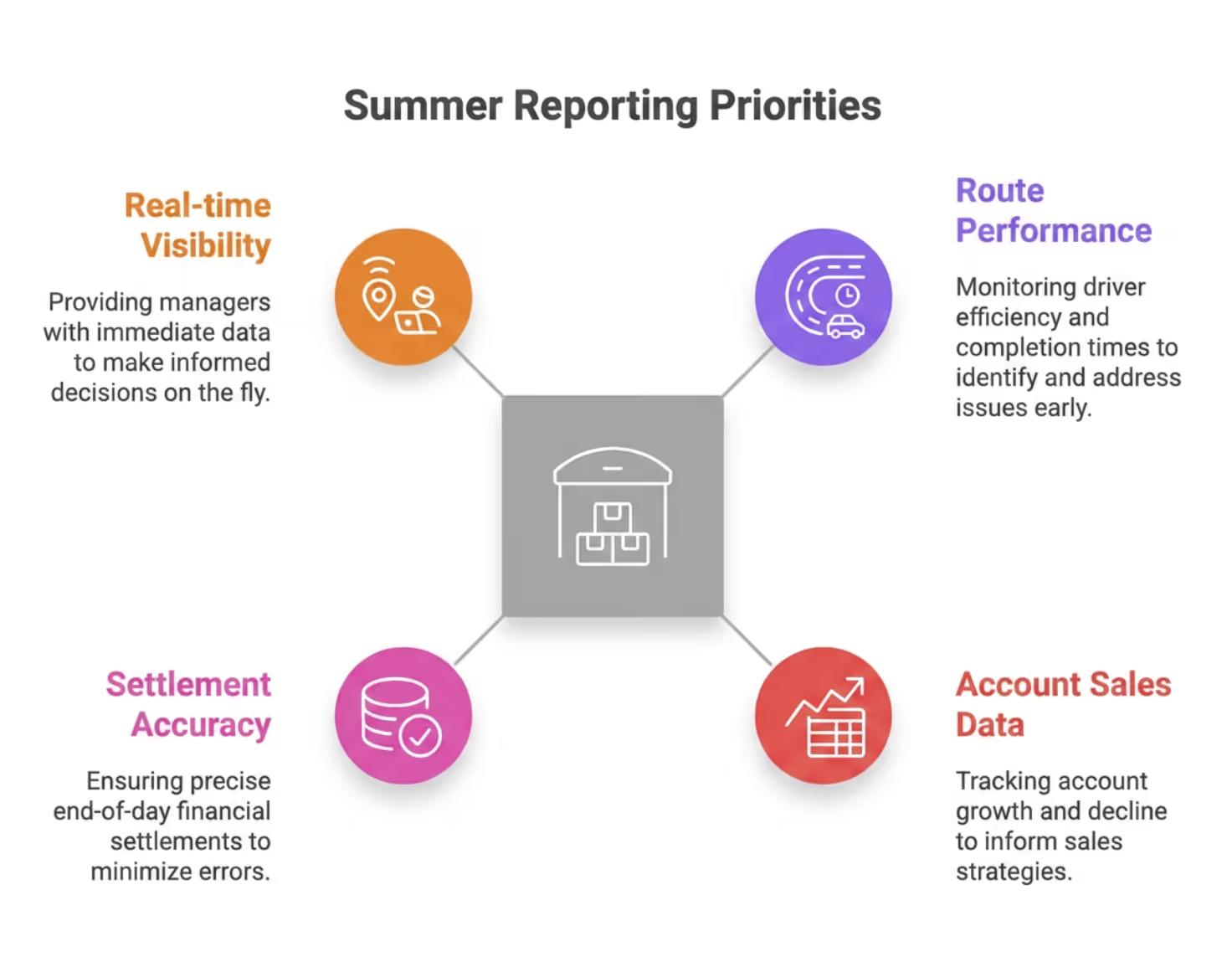
- Route performance — are your drivers hitting their stops efficiently? Are completion times trending in the right direction? Route performance metrics enable you to catch a problematic route early, before it becomes a pattern. Tip: Check out the Route Management report in DSD Manager.
- Account-level sales data — knowing which accounts are growing, which are flat, and which are slipping gives your team something to act on during the season, not after.
- Settlement accuracy — with more transactions daily, errors compound quickly in the summer. Make sure your end-of-day settlement reporting is tight so discrepancies are caught quickly.
- Real-time visibility — when you're running at peak volume, waiting until the end of the day to know what's happening on your routes is too late. Real-time data lets managers make better decisions on the fly.
If you're looking to go deeper into your data, IntegraSys Business Analytics gives you a more powerful lens on your operations, turning your DSD Manager data into visual, interactive reports that make it easier to spot trends, compare performance across routes, and share insights with your team.
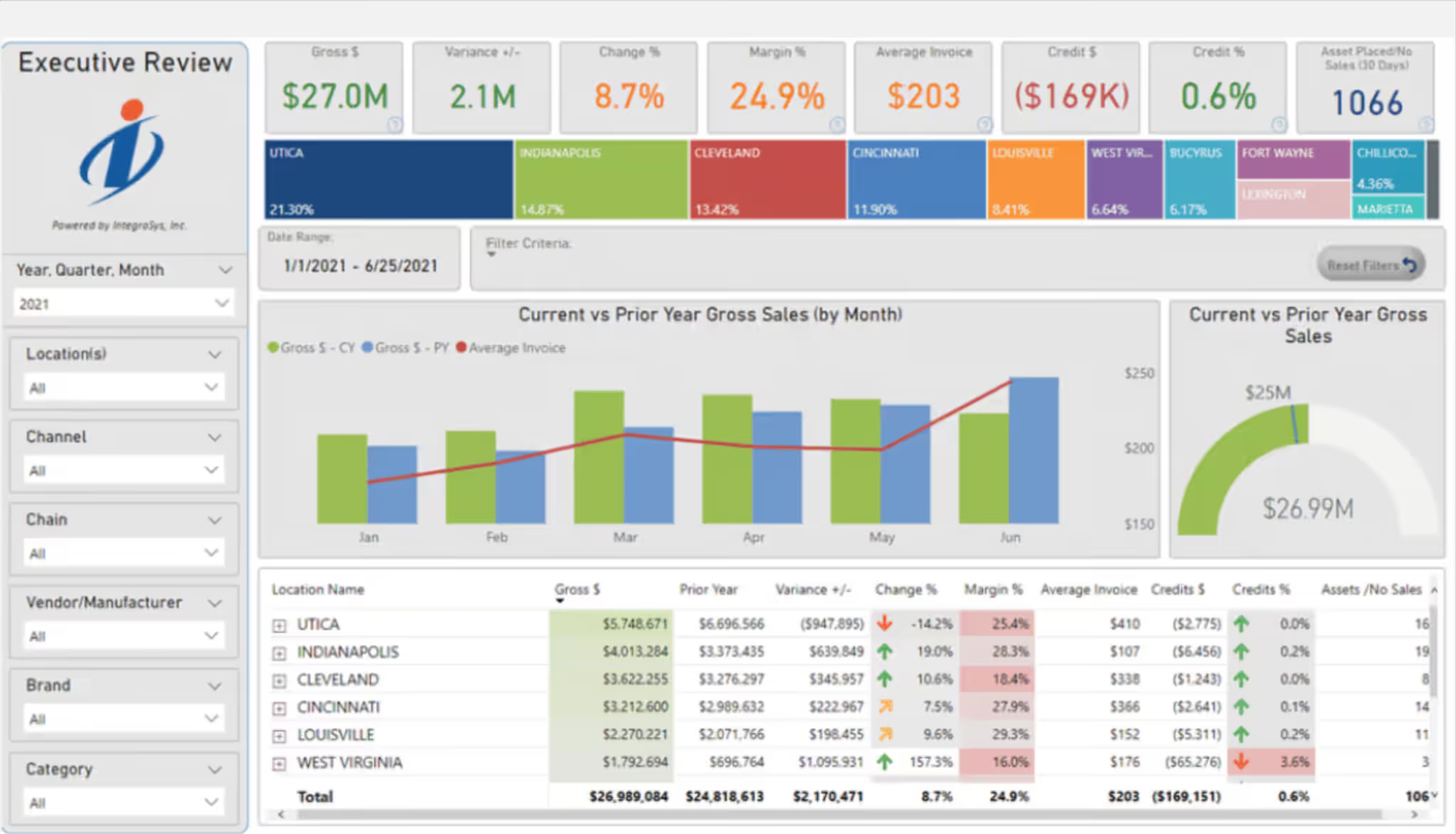
The bottom line: reporting isn't something to set up only when things go wrong. It's something you configure when things are calm, so you have the visibility to keep them that way.
Conclusion
The summer season doesn't wait for anyone. But the good news is that a few weeks of focused preparation in April and May can make the difference between a chaotic summer and a manageable one.
To recap, here's what smart distributors are doing right now:
- Reviewing route capacity so stop counts, load sizes, and driver schedules are ready for peak volume.
- Auditing freezer inventory to clear winter slow-movers and stock up on high-velocity summer product.
- Preparing drivers — especially seasonal hires — with the training and tools they need to hit the ground running.
- Configuring reporting so route performance, account sales, and settlement data are visible and actionable when it matters most.
- Addressing last summer's pain points while there's still time and space to fix them.
Summer is coming whether you're ready or not. The operators who thrive treat May as the most important month of the year. To learn more, contact our support team for guidance or call (908) 686-5200 (option 1).
Streamline Your DSD




All Rights Reserved.