
Recent News
Beyond the Delivery: What Your Field Team Sees That Never Reaches You
Imagine your driver finishing an ice cream delivery at a busy convenience store on a Friday afternoon. The delivery itself is quick. The product is dropped off, the paperwork is completed, and then it's time to move on.
During those few minutes, the driver notices several things. The store's freezer is starting to frost over on one side. A competitor's novelty brand now has the best shelf in the impulse cooler. As he leaves, the manager mentions they're considering a second location across town.
None of this is part of the official delivery. It doesn't show up in your route accounting. Unless that information gets passed to the right person back at the branch, you may never hear about it.
And it's not just drivers. In many DSD operations, pre-sales reps, merchandisers, and other field personnel are also in stores every day noticing the kinds of details that can shape sales, service, and operational decisions.
This is the everyday reality of DSD. The transactional side—deliveries, returns, payments, and inventory—runs smoothly through DSD Manager, just as it should. But the things your field team sees and hears every day often go uncollected, even though they hold real business value.
Two tools built into DSD Manager are designed to capture exactly this kind of intelligence: Surveys and Asset Management. For ice cream and dairy operations in particular, getting more out of them can improve visibility, protect assets, and help your team act faster on what is happening in the field.
The Visibility Advantage You're Already Paying For
Your sales team might visit a key account once a month. You might get out in the field yourself once a quarter. But your field team is there every week, often multiple times.
That level of coverage is easy to underestimate.
Across routes, stops, and seasons, the people working in the field see freezer and cooler conditions change, competitor placement shift, customer patterns take shape, and store conversations reveal opportunities or concerns that might never surface any other way.
The issue is not whether that visibility exists. It does. The issue is that, in many operations, very little of it gets captured in a consistent, usable way. The back office can't do much with a constant stream of scattered, one-off observations, and field staff don't have a natural place to send them.
The visibility is there. The question is how to capture it without slowing your team down. That is where Surveys come in.
Surveys Turn Everyday Observations Into Useful Intelligence

Surveys in DSD Manager give reps an easy, organized way to record what they already notice in the field.
Surveys are created in DSD Manager and assigned to reps, routes, or customer types. They can be used in many ways. Some are broad, while others are very specific. A survey might include quick yes-or-no questions, dropdown responses, photo uploads, or short notes when more detail is needed.
This flexibility is what makes surveys so useful.
A survey can support:
- a pre-trip vehicle inspection
- a competitor audit
- a merchandising or display check
- quick customer feedback
- photo of asset or shelf before and after service
Think back to the convenience store example. A competitor’s novelty brand has taken the best shelf in the impulse freezer. In one case, the driver notices it and moves on. By the time sales hears about it, it may be too late to respond.
In another case, a sales rep takes a photo, answers a few questions, and submits the survey in seconds.
Now the management team has something real they can act on:
- the account
- the date
- the photo
- the competitive detail
- the timing needed to respond quickly
That is the difference between just noticing something and having useful information.
The same process can capture other valuable signals too. A manager mentions a second location. An empty end cap could support a display. A customer asks about a product line you do not carry. Shelf conditions suggest declining interest or growing demand. A pre-trip issue hints at a roadside problem before it happens. A quick photo documents that a freezer was properly stocked and merchandised.
Each detail may seem small on its own. But when collected regularly across routes and over time, these small details add up to a steady stream of useful information for your business.
Since survey responses go straight into DSD Manager, the information stays in the system your team already uses. There is no extra app to manage and no spreadsheet to keep up with.
For ice cream and dairy distributors, this is even more important. Frozen and refrigerated products depend heavily on cooler placement, shelf position, equipment condition, and visibility. That last piece—the equipment itself—is where Asset Management comes in.
Asset Management Helps Optimize Equipment in the Field
For ice cream and dairy distributors, a meaningful amount of capital is sitting in other people’s stores.
Freezers. Coolers. Racks. Display units.
These assets work for you as long as they are in good shape. When they are not, costs can rise quickly.
The challenge is knowing what is happening. Once an asset is in place, you might not discover a problem until a customer complains, product quality declines, or the unit stops working.
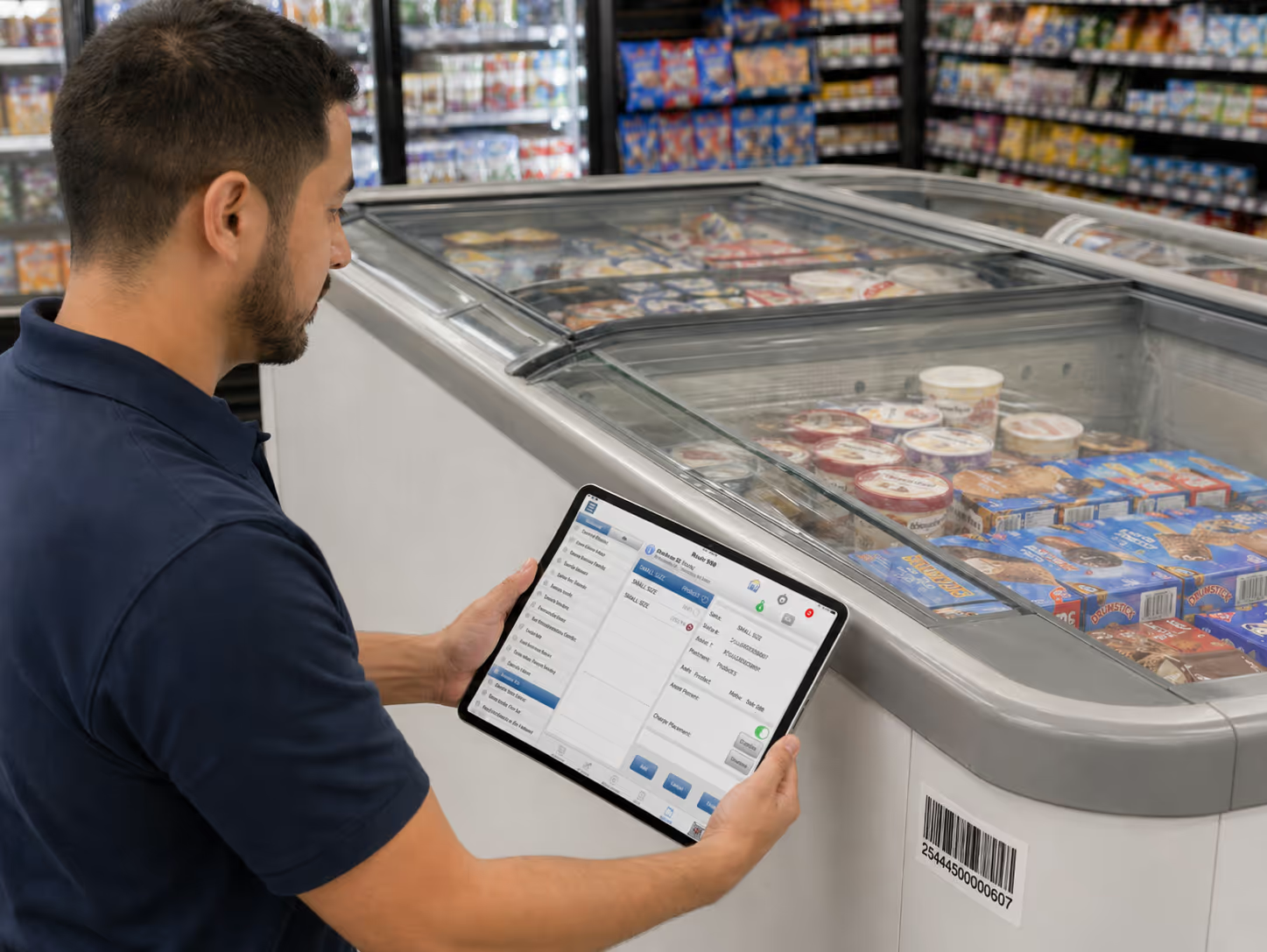
Asset Management in DSD Manager helps close this gap. Each asset can be tracked with a barcode scan, creating a clear record of what happens to that unit over time. This record may include:
- placement history
- condition records and photos
- service and warranty details
- cost and depreciation data
- audit status
In practice, the process is simple. A field rep arrives at a stop, scans the asset, and does a quick condition check. This might include a photo or a few inspection questions. In about a minute, the asset record is updated.
That one minute can save a lot of trouble later.
Picture a freezer at a strong account that has been underperforming for months. The seal is starting to fail. Frost is building up. The temperature is drifting higher than it should.
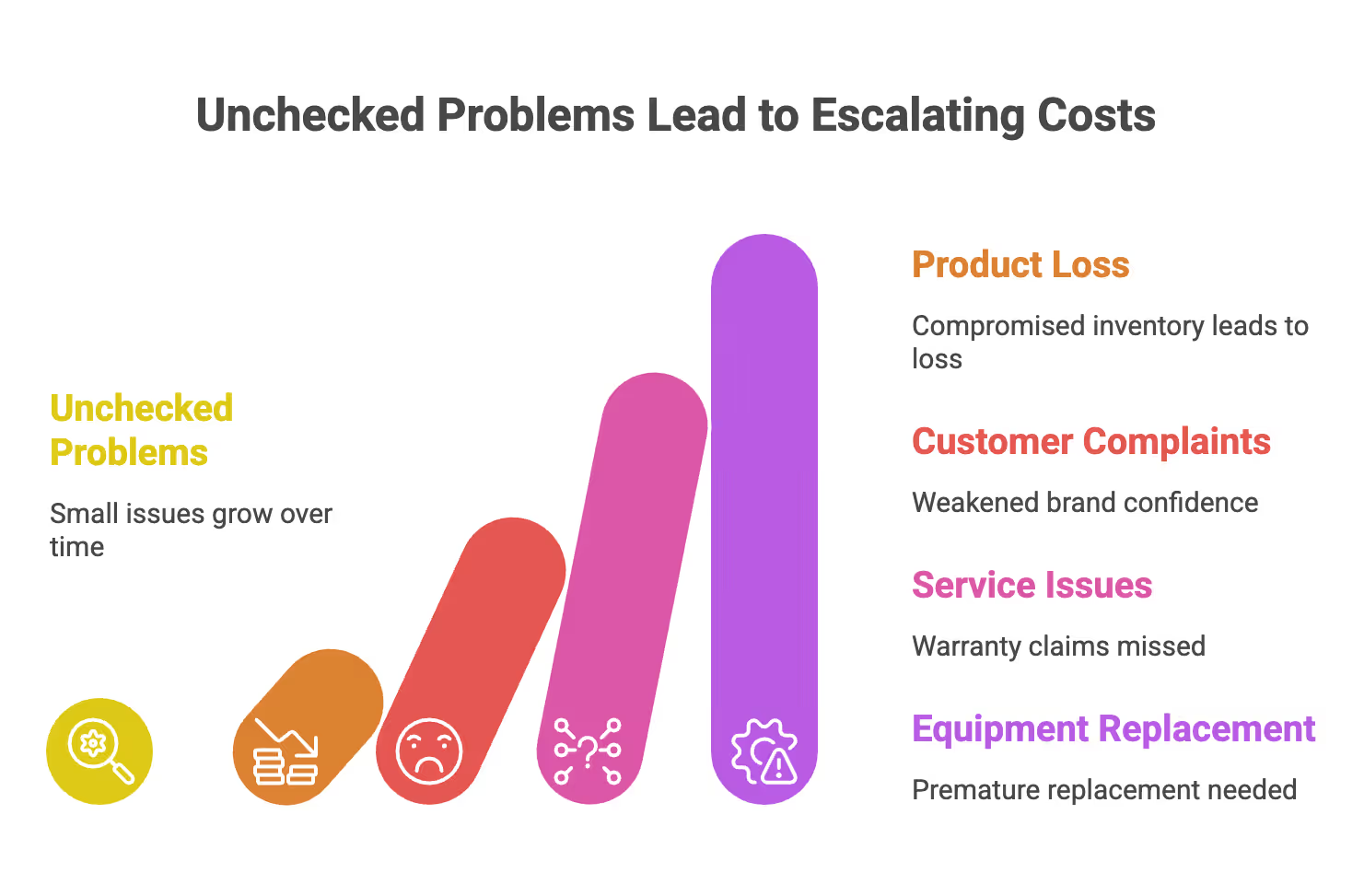
At first, the problem may seem small. But over time, the costs start to add up:
- product loss from compromised inventory
- customer complaints that weaken confidence in your brand
- service issues that might have been covered under warranty if caught earlier
- premature replacement of equipment that could have lasted longer
These costs rarely show up all at once. They build up slowly across routes, accounts, and seasons.
Keeping a regular record of changes in asset condition. Instead of finding out about a failure after it happens, your team can spot patterns early, e.g., a freezer flagged on several visits, repeated notes about temperature drift, worsening frost, or a unit that keeps having service issues.
This kind of visibility helps you make better decisions. You can step in sooner, handle warranty issues with better records, establish clearer accountability when damage occurs, and decide on repairs or replacements based on real data rather than guesswork.
This is especially important during peak season, when equipment is under more strain and downtime can directly affect revenue.
Small Inputs Lead to Better Decisions Over Time
A single survey response will not change your business. One asset photo will not either.
The real value comes from being consistent.
When field reps record a few useful details every day, the result is not just a collection of notes. Over time, it becomes a meaningful dataset that helps you make better decisions about where to invest, where to place equipment, which accounts need attention, where competitor activity is increasing, and which assets may be heading toward trouble.
This is also where Surveys and Asset Management work together. A survey showing new competitor activity is more helpful when you can also check your equipment’s condition at that account. An asset record with repeated issues is even more useful when it is backed up by sales rep notes and photos from several visits.
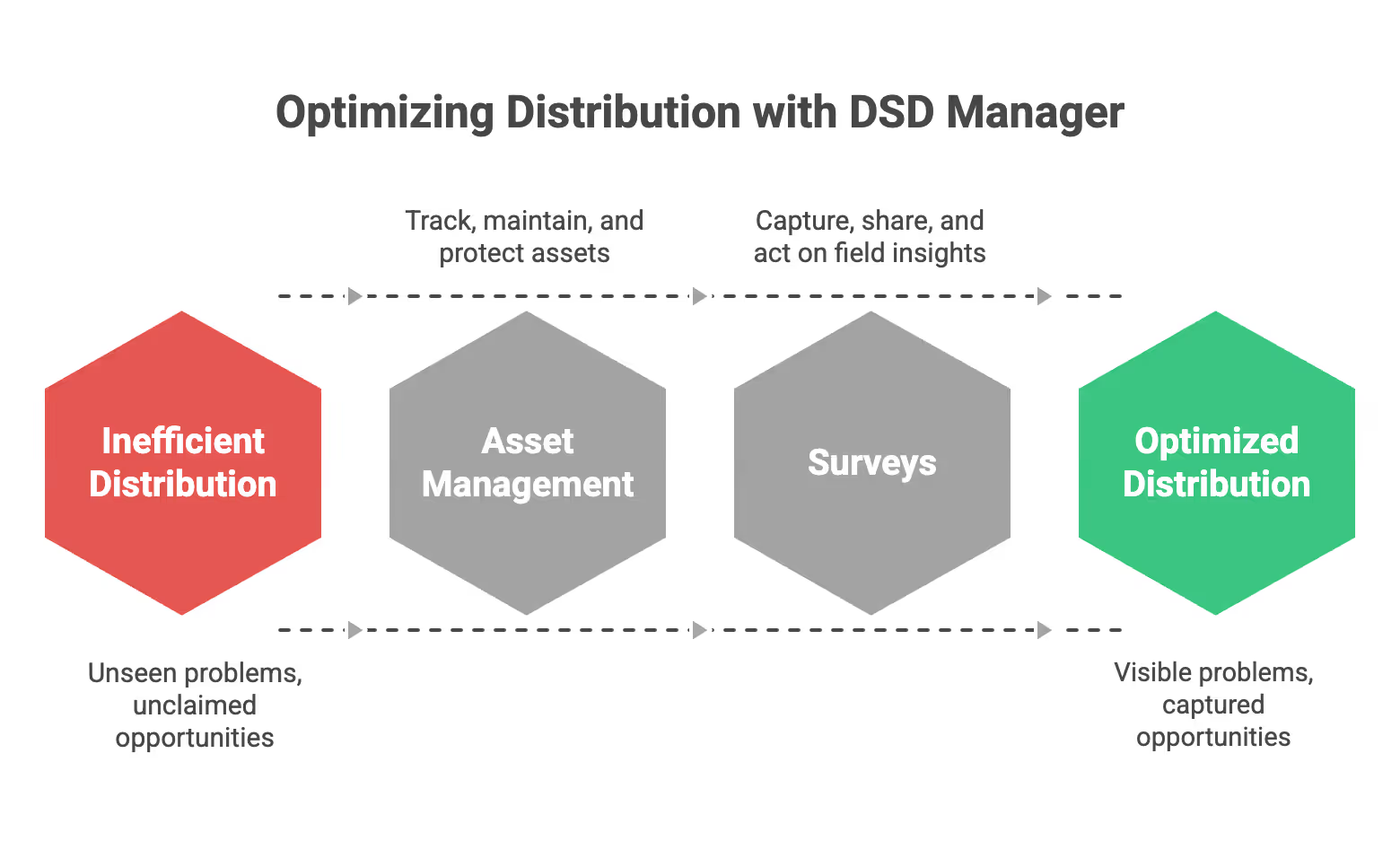
Individually, each tool is helpful. Together, they give you a clearer view of what is happening in the field and a stronger basis for acting on it.
Conclusion
Your field reps are already seeing the frosting freezer, the shelf change, and the manager hinting at a second location. They are noticing the kinds of small details that often seem minor in the moment, but can have real implications for sales, service, equipment performance, and account growth.
That intelligence already exists. The real question is whether your business has a reliable way to capture it and put it in front of the people who can act on it.
That is what Surveys and Asset Management in DSD Manager are really about. They are not about adding busywork or slowing your team down. They are about turning everyday field observations into usable business intelligence.
And because both tools are already part of DSD Manager, getting more value from them does not necessarily require new software or a major process change. In many cases, it simply starts with using the tools you already have more intentionally.
If your team wants to get more from Surveys or Asset Management, IntegraSys can help you think through practical use cases, rollout ideas, and simple ways to improve adoption. Reach out to our support team for guidance or call (908) 686-5200 (option 1).
To learn more about Surveys and Asset Management in DSD Manager, refer to these resources:
- Unlocking the Power of Surveys in DSD Manager
- Surveys Webinar
- Optimizing Asset Management in Direct Store Delivery
- How To Use the Asset Scanning and Audit Feature
- Asset Management
- How to Import Assets as Freezers
Streamline Your DSD




All Rights Reserved.