
Recent News
Mid-Year Reset: 5 Reports Every DSD Operator Should Run Before July 1
Introduction
It’s the last week of May. The warehouse is busy, but not frantic. Drivers are making their regular stops. Orders are going out. Customers are being serviced. From the outside, the business may look like it’s running normally.
But the reports may be telling a different story.
One route may be slipping. A few important customers may be ordering less. Some products may be moving faster than expected, while others are sitting too long. Shorted items and missed stops may be starting to form a pattern.
None of these issues may seem urgent on their own. But together, they can point to problems that will become much harder to fix later in the year.
That’s why July 1 is a natural checkpoint for DSD operators.
A mid-year reset does not mean reviewing every report in the system or getting buried in data. It means reviewing a focused set of practical reports that can help you see where sales are growing, where performance is slipping, and where hidden issues may be costing you money.
In this article, we’ll look at five reports in DSD Manager that every operator should consider running before July 1. Together, these reports can help leadership see what is changing, where attention is needed, and what adjustments should be made before the second half of the year begins.
Why a Mid-Year Reporting Review Matters
Year-end is often too late to fix trends that started months earlier.
A mid-year reporting review gives operators a chance to spot early warning signs while there is still time to respond. Instead of waiting for problems to become obvious, leadership can review the first half, identify what needs attention, and make practical adjustments for the second half.
A strong mid-year reporting review can help DSD operators:
- Identify customers that need sales follow-up
- Spot products that are gaining or losing momentum
- Review route performance before small issues become larger ones
- Find inventory gaps that may be causing missed sales
- Catch service problems before they damage customer relationships
- Review aging balances before collection issues affect cash flow
In other words, a mid-year reset helps operators move from reaction mode to management mode.
Instead of waiting for problems to become obvious, leadership can use a mid-year review to catch early warning signs, make timely adjustments, and enter the second half with greater confidence.
1. Period Customer Sales Report
Know Which Customers Are Growing or Slipping
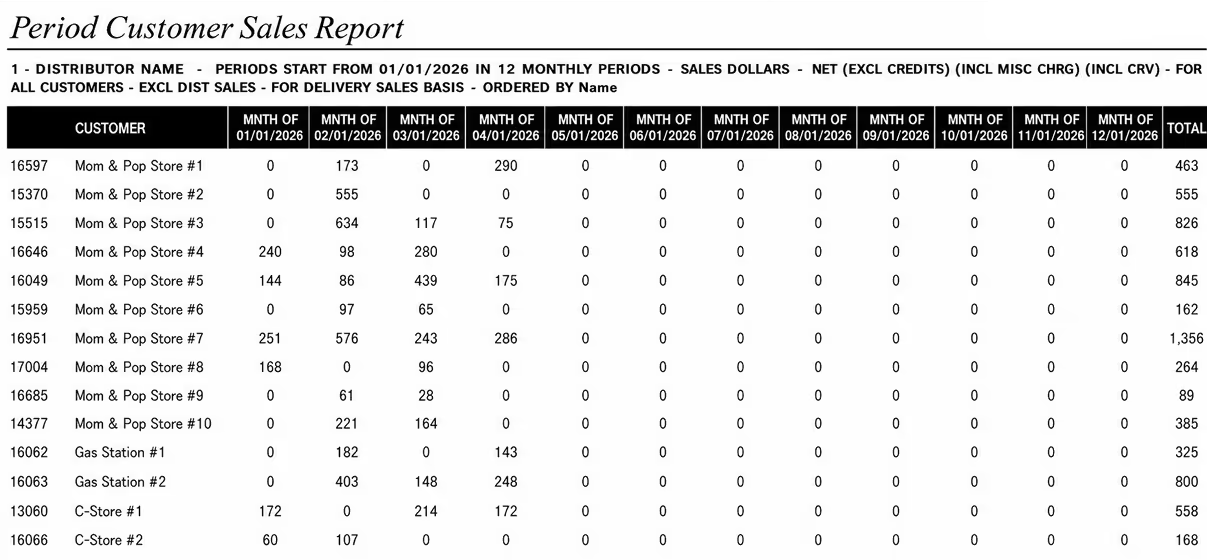
The Period Customer Sales Report gives operators a customer-level view of sales over a selected period, such as the first half of the year. For a mid-year review, this is one of the best places to start because it shows where customer activity is changing.
Some accounts may be growing steadily. Others may be ordering less than they did earlier in the year. A few may show an unexpected drop that deserves a closer look.
That view is important because total sales can sometimes hide what is happening underneath. Company-wide numbers may look steady, even while certain customers are slowing down or shifting their buying patterns.
This report can help operators identify:
- Customers with strong sales growth
- Accounts with declining sales
- Important customers that may need sales follow-up
- High-potential accounts that may be ready for expanded placement, additional products, or promotional support
The value is not just in seeing who bought what. It is in knowing where the sales team should focus its time.
If a key account is down, the team can investigate before the trend gets worse. Has the customer reduced shelf space? Are they buying from another distributor? Are certain items no longer moving? Was there a service issue earlier in the year?
On the other hand, if a customer is growing, that may be an opportunity to build on the momentum. The account may be ready for a broader product mix, better placement, or a more focused sales conversation.
For a mid-year reset, operators should use the Period Customer Sales Report to compare performance, look for unexpected changes, and identify the customers that deserve attention while there is still time to adjust.
2. Product Sales Analysis
Understand What Is Really Moving
The Product Sales Analysis report helps operators see sales performance at the product level. While the Period Customer Sales Report shows which customers are growing or slipping, this report helps explain what products may be driving those changes.
For a mid-year review, this is especially useful because product performance can shift throughout the year. Some items may be gaining momentum. Others may be slowing down. Seasonal products may be performing better or worse than expected. And some products may be taking up inventory without producing enough return.
This report can help operators identify:
- Best-selling products
- Slow-moving items
- Products gaining or losing momentum
- Seasonal trends
- Items that may need better placement, promotion, or inventory support
In DSD, product mix matters. A route may be producing sales, but that does not always mean the mix is as profitable or efficient as it could be. Some products may deserve more attention because they sell well, support stronger margins, or help customers grow. Others may need to be reviewed because they are tying up inventory, creating extra handling, or underperforming in the field.
The Product Sales Analysis report can also support better sales conversations. Instead of relying only on what a manufacturer is promoting, sales teams can look at what is actually moving and recommend products that make sense for the customer, the route, and the distributor.
For a mid-year reset, operators should use this report to review top performers, spot products losing momentum, and make smarter decisions about purchasing, promotions, and product focus during the mid-year planning process.
.avif)
3. Monthly Route Sales Report
Find Strong and Underperforming Routes
The Monthly Route Sales Report gives operators a route-level view of sales performance over time. For a mid-year review, this report is especially helpful because it shows how each route is performing month by month, rather than only showing total company sales.
That matters because route-level trends often reveal issues that company-wide sales totals can hide. One route may be growing steadily, another may be flat, and another may be slipping in a way that deserves attention.
This report can help operators identify:
- Routes that are performing well
- Routes that may need follow ups and adjustments
- Month-to-month changes in route sales
- Possible territory, service, staffing, or customer mix issues
- Routes that may need sales support or operational review
Routes are the backbone of DSD operations. If a route is underperforming, the cause may not be obvious right away. It could be related to customer changes, missed opportunities, route structure, driver coverage, service consistency, or product mix.
The Monthly Route Sales Report gives managers a better starting point for asking the right questions such as:
- Is the route losing sales because certain customers are down?
- Are there accounts that need more attention?
- Is the route overloaded, underdeveloped, or affected by staffing changes?
- Are service issues or missed stops contributing to the decline?
The report can also highlight what is working. If one route is growing faster than others, operators may be able to identify habits, customer opportunities, or product strategies that can be applied elsewhere.
For a mid-year reset, operators should use the Monthly Route Sales Report to compare route performance, look for unusual changes, and decide where sales or operations teams may need to take a closer look as part of the July 1 review.
4. Product Fill Rate
Spot Missed Sales Hidden in Inventory Gaps
The Product Fill Rate report helps operators see how well customer orders are being fulfilled by product. For a mid-year review, this report can be especially valuable because it reveals where sales may be getting lost before they ever show up as completed revenue.
A product may have strong demand, but if it is frequently shorted, the opportunity is not being fully captured. Customers may be ordering the item, but the distributor may not have enough inventory available to fill those orders consistently.
This report can help operators identify:
- Products that are frequently shorted
- Items with possible forecasting or purchasing issues
- Missed sales caused by inventory gaps
- Products that may need stronger replenishment support
- Demand that may be higher than expected
In DSD, poor fill rates can create revenue leakage. A shorted item may seem like a small issue on a single order, but repeated shortages can add up across routes, customers, and weeks of activity.
Fill-rate issues can also affect customer trust. If a retailer expects a product and does not receive it, they may lose sales at the shelf. Over time, repeated shortages can frustrate the customer and open the door for competitors.
The Product Fill Rate report is also useful when reviewed alongside product sales trends. If a product is selling well and also showing fill-rate problems, demand may be stronger than current inventory planning suggests. If a product is losing momentum, fill-rate issues may help explain why.
For a mid-year reset, operators should use the Product Fill Rate report to find repeat shortage patterns, review products with missed sales potential, and make inventory adjustments before small issues become larger problems.
5. Unserviced Audit Report
Catch Service Gaps Before They Become Bigger Problems
The Unserviced Audit Report helps operators identify customers or stops that were not serviced as expected. For a mid-year review, this report is especially useful because missed service activity can quietly affect sales, customer relationships, and route performance.
A missed stop may not seem like a major issue when it happens once. But if the same customer is skipped more than once, or if missed stops are concentrated on certain routes, the pattern deserves attention.
This report can help operators identify:
- Customers who were skipped or not serviced
- Recurring missed stops
- Route-level service gaps
- Possible staffing, scheduling, or operational issues
- Service problems that may affect customer satisfaction
In DSD, service consistency matters. Customers rely on regular visits to keep product on the shelf, maintain inventory, and support sales. When a stop is missed, the impact may not show up immediately, but it can lead to lost sales, lower confidence, and strained relationships over time.
The Unserviced Audit Report helps managers catch missed service patterns before they become bigger problems. Are the same customers being missed repeatedly? Are certain routes showing more unserviced stops than others? Are service gaps tied to staffing, route changes, delivery schedules, or communication issues?
This report can also help protect relationships with principals and suppliers. If products are not reaching the right accounts consistently, it can affect performance expectations and create questions about execution in the field.
For a mid-year reset, operators should use the Unserviced Audit Report to review missed stops, identify recurring service issues, and follow up before those gaps affect second-half sales and customer trust.
Bonus: Aged Trial Balance
Check Financial Health Before the Second Half
While the first five reports focus on sales, products, routes, inventory, and service activity, the Aged Trial Balance gives operators an important financial view. It shows outstanding customer balances by aging period, helping leadership see which accounts are current and which may require collection follow-up.
For a mid-year review, this report is useful because strong sales do not always translate into strong cash flow. A customer may be ordering regularly, but if payments are falling behind, that account may need closer attention before the second half begins.
This report can help operators identify:
- Customers with overdue balances
- Accounts that may need collection follow-up
- Potential credit risks
- Cash flow concerns
- Customers whose sales activity should be reviewed alongside payment history
The Aged Trial Balance helps add financial context to the other reports. For example, a customer may show strong sales growth in the Period Customer Sales Report, but the Aged Trial Balance may reveal that the same customer is falling behind on payments. In that case, the issue is not just whether the account is growing. It is whether that growth is being collected.
This report can also help operators spot accounts that need a different kind of follow-up. Some customers may need a sales conversation. Others may need an accounting conversation. Some may need both.
For a mid-year reset, operators should use the Aged Trial Balance to review overdue balances, identify collection risks, and make sure the company is not entering the second half with growing revenue but weakening cash flow.
Mid-Year Action Plan
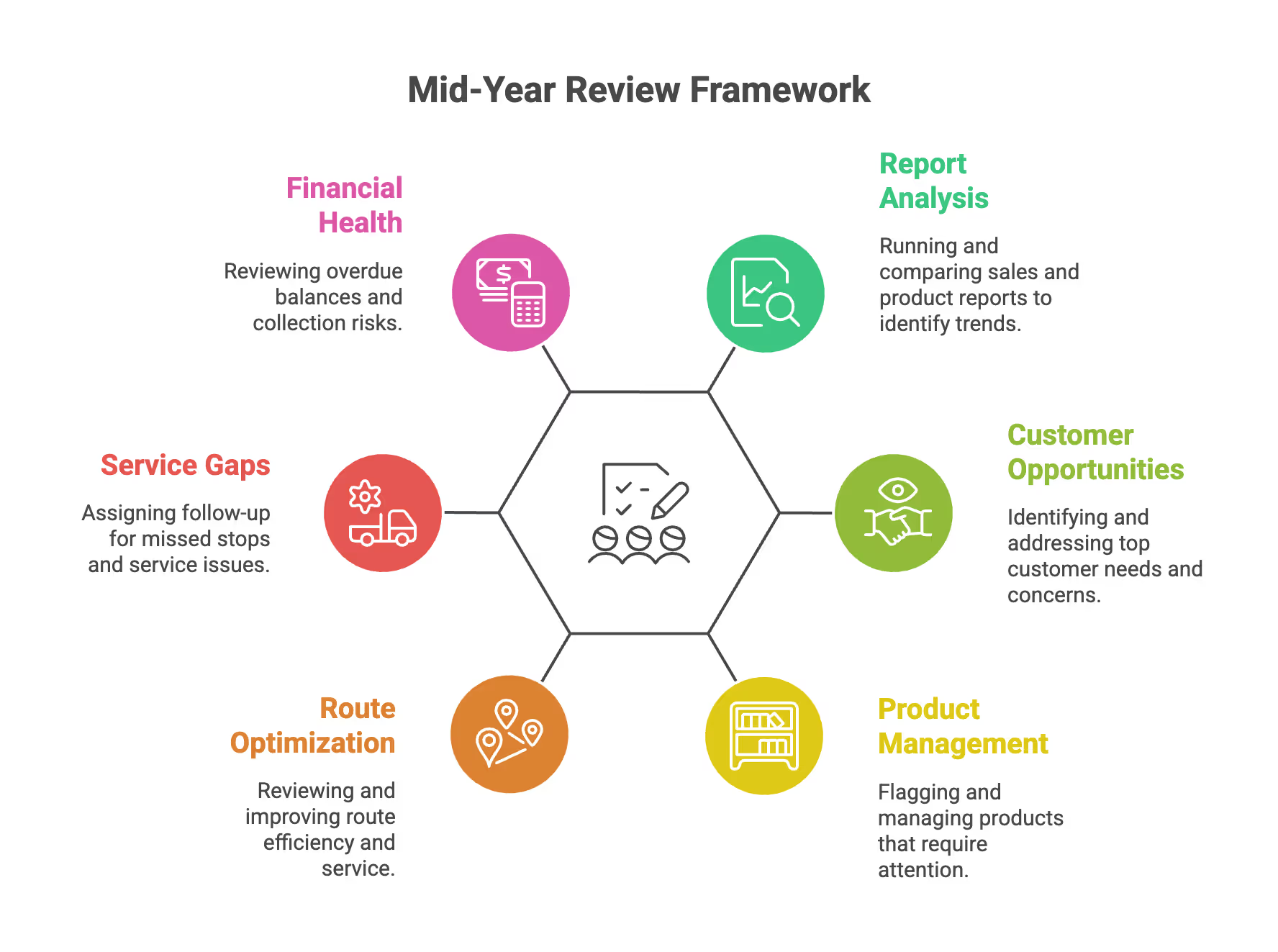
Running the reports is only the first step. The real value comes from turning the findings into action before the second half begins.
A simple mid-year review process can help leadership stay focused:
- Run the reports for the first half of the year.
- Compare results against the prior period or prior year where possible.
- Identify the top customer opportunities or concerns.
- Flag the products that need purchasing, promotion, or sales attention.
- Review route trends with operations and identify routes that need a closer look.
- Assign follow-up for repeat shortages, missed stops, and service gaps.
- Review overdue balances and collection risks.
The goal is not to solve every issue at once. It is to identify the areas that matter most and make sure they do not get lost in day-to-day operations.
For example, one person may follow up on declining customers. Another may review slow-moving or frequently shorted products. Operations may take a closer look at underperforming routes or recurring missed stops. Accounting may focus on overdue balances that need attention.
By assigning clear next steps, the mid-year review becomes more than a reporting exercise. It becomes a practical reset that helps the team enter the second half with better focus and fewer surprises.
Conclusion
A mid-year reset does not require operators to review every report in the system. The key is to focus on the reports that reveal the most useful trends while there is still time to act.
For DSD distributors, those reports can show where customers are growing or slipping, which products need attention, how routes are performing, where inventory gaps may be costing sales, and whether service or collection issues need follow-up.
By reviewing these reports before July 1, operators can focus sales efforts, support better purchasing decisions, improve route performance, address missed service activity, and protect cash flow before the year gets away from them.
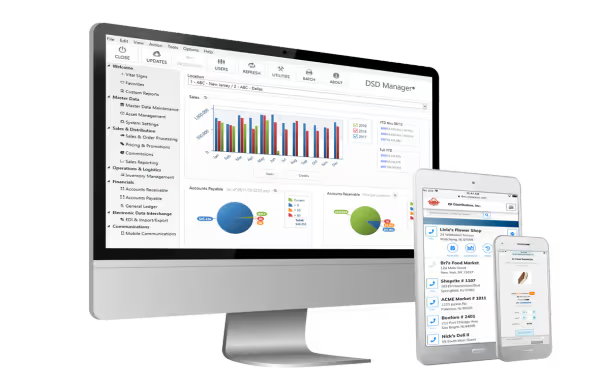
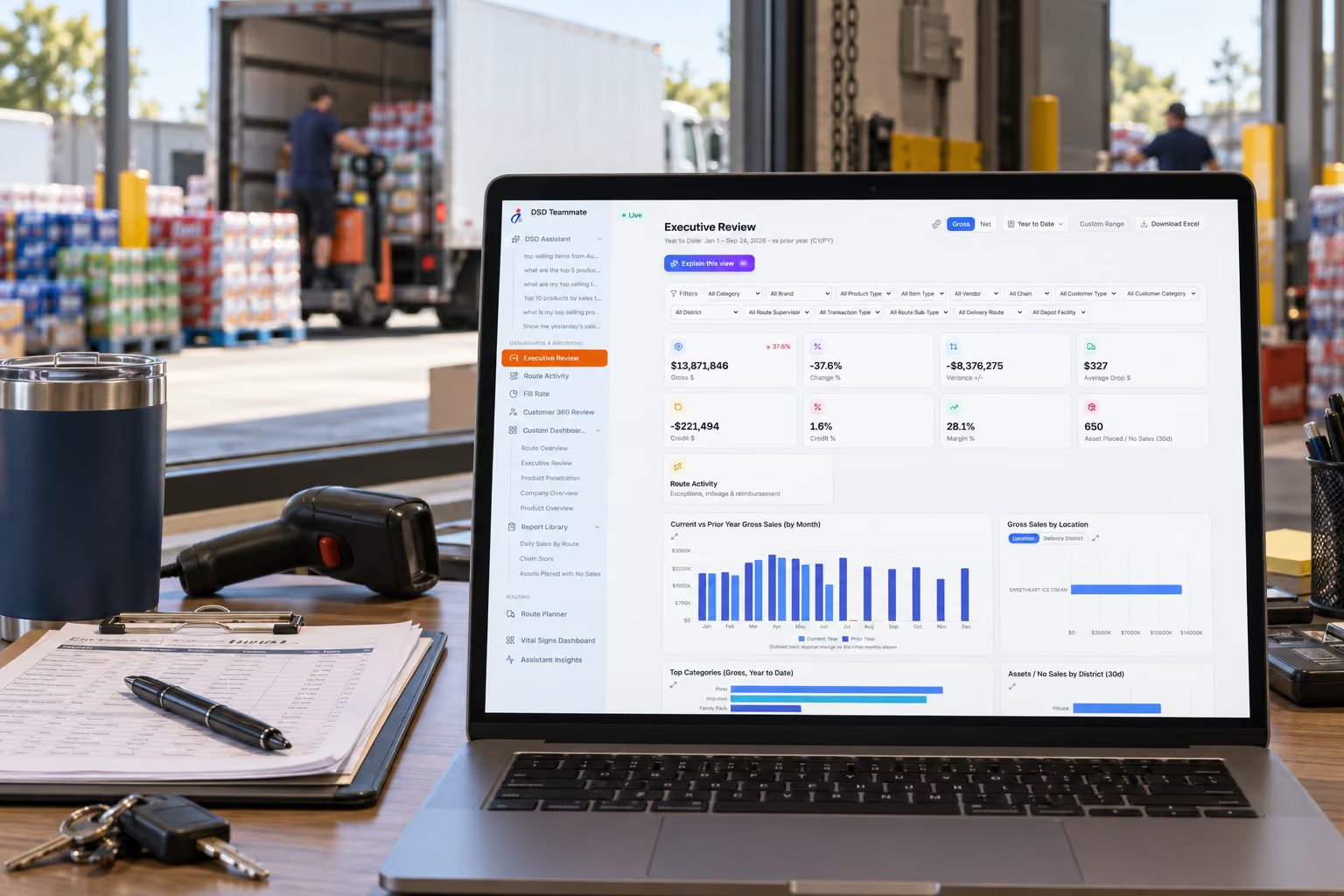
With DSD Manager, operators can turn daily activity into clearer decisions, helping leadership enter the second half with better focus, fewer surprises, and a stronger plan for what comes next.
Streamline Your DSD



All Rights Reserved.