
Recent News
5 Visibility Questions That Reveal Where You're Losing Money
Orders are going out. Drivers are hitting their stops. Shelves are being restocked. And invoices are being sent. The operation looks healthy, and nothing seems obviously wrong.
But that’s where the problem can hide.
Most margin leaks in a DSD operation go unnoticed. There’s no warning when a route slowly shifts from profitable to just breaking even. No one alerts you when a strong account starts ordering a bit less each month. The numbers that could show you something is wrong are there, but they’re hidden in end-of-day reports, monthly summaries, or spreadsheets that only get made when a problem is already obvious.
A Quick DSD Exercise
Review the five questions below. For each one, don't ask whether you could eventually get the answer. You probably could, given enough time and digging. Ask this instead: Could I pull it up within the next three minutes and trust the number I saw?
If yes, move on. If you hesitated — if the honest answer was "I'd have to dig," "not until end-of-day," or "only if someone built it" — that's a no. Count it. The hesitation is the data point.
1. Can your reps see real-time warehouse inventory right now?
Not end-of-day. Not after the last truck is loaded. Right now, mid-morning, with a rep standing in front of a customer who wants more product.
When a rep can't see what's actually on the warehouse floor, they're selling blind. They either under-promise to play it safe — leaving orders (and margin) on the table — or they commit to product that isn't there, and someone back at the warehouse eats the scramble. For temperature-sensitive loads, it compounds: an ice cream distributor whose reps can't see live warehouse counts is also guessing at what's available to move before it sits too long.
What it costs when the answer is "I don't know": Orders get promised against stock that's gone, upsells get missed because the rep played it safe, and warehouse staff fight allocation in real time. (More on mobile inventory for DSD →)
2. Do you know your margin by route this week or only company-wide at month-end?
Many operators know their company's overall margin down to the decimal place. But far fewer can quickly say which routes are helping that number and which ones are pulling it down.
A company-wide margin is an average. It can hide a route that has been losing money for weeks because of fuel costs, overtime, service time, or a weaker account mix. By the time the month-end report shows the problem, you may have already run that route at a loss twenty or more times.
What it costs when the answer is "I don't know": Unprofitable routes keep running because they're hidden inside a total that still looks fine. The business looks healthy overall, while specific routes quietly drain margin. (More on DSD and BI →)
3. If a key account's orders dropped 20% over three months, would you catch it before they churned?
This is one of the most common ways revenue slips away.
Accounts rarely call to end the relationship. More often, they drift. One month, the order is slightly smaller. The next month, they skipped a week. By the third month, volume is down 20%, but each individual order still looked “normal” at the time.
By the time the decline shows up in a quarterly review, the relationship may already be at risk. The best chance to save the account was earlier, when the drop was still small and a quick conversation could have made a difference.
What it costs when the answer is "I don't know": Churn gets discovered too late. Then the team spends the next quarter trying to replace volume that could have been protected.
4. How long does route reconciliation take, and how much of it is still manual?
Think about your end-of-day settlement process. How many people touch it? How often is data re-entered, paperwork checked against the system, or a discrepancy resolved with someone’s best guess because finding the real answer would take too long?
Every manual step adds labor cost and increases the chance of mistakes. The hours add up, but the bigger issue is the small discrepancies that get written off because checking them does not feel worth the time until you see how much they add up over a full year.
What it costs when the answer is "I don't know": Settlement time grows as the team grows. Instead of scaling with better systems, the process adds more labor, more manual checks, and more write-offs that no one is consistently tracking.
5. Can you rank rep performance today without building a spreadsheet?
Not just “could I put it together.” Can you see, in the next five minutes, who your top and bottom performers are this month by margin, volume, or account growth without having to export data?
If you have to build a report manually every time you want to rank your team, two things are likely true: you’re not checking often enough, and you’re making coaching, recognition, or territory decisions based on gut feeling between those times.
What it costs when the answer is "I don't know": Your best rep may not get recognized quickly enough, and a struggling rep may not get the help they need until the pattern has already cost the business money.
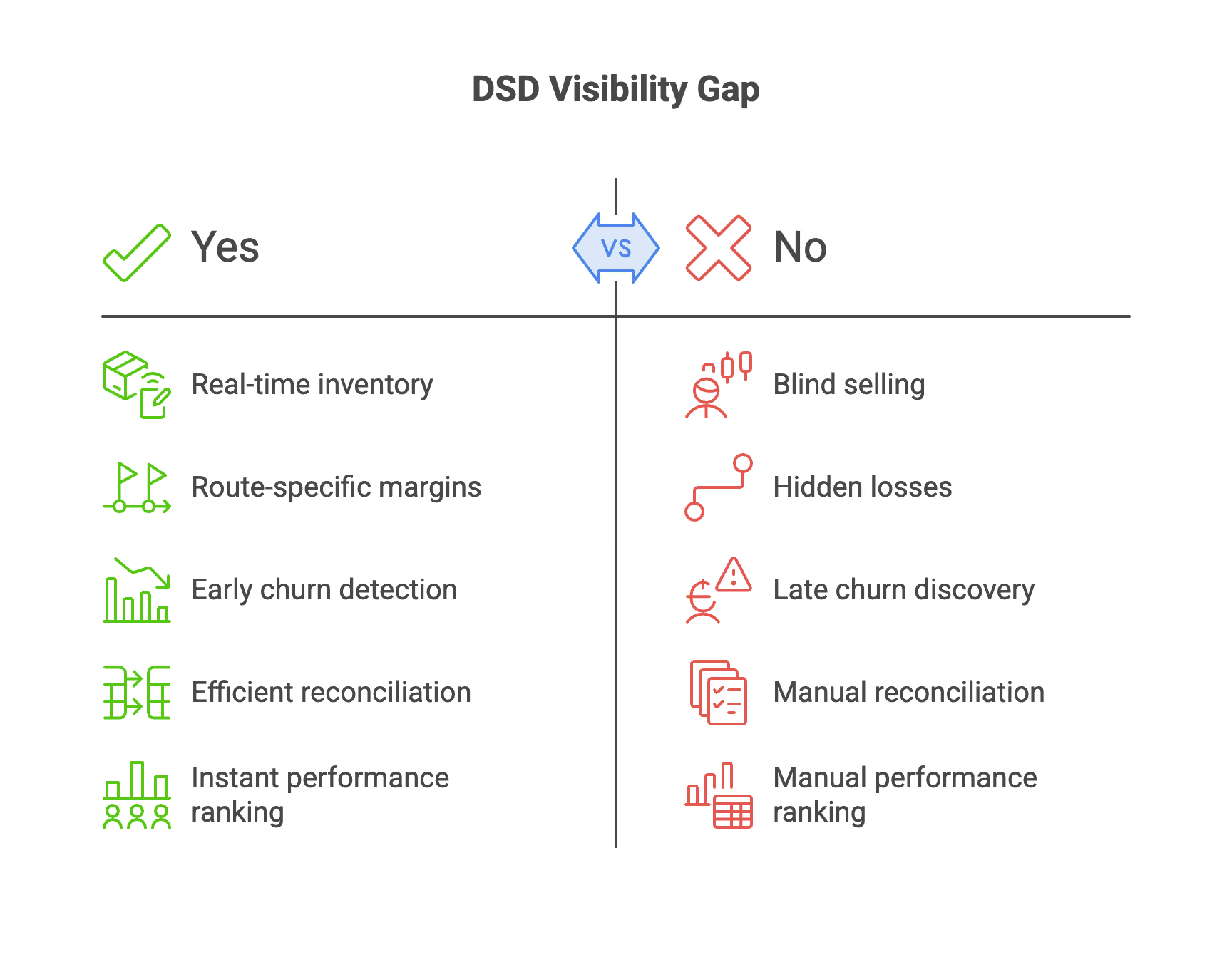
Scoring: How did you do?
Add up your no's: every question where you hesitated, where the honest answer was "I'd have to dig," "not until end-of-day," or "only if someone built it."
0–2: You've got solid visibility into your operation. The remaining gaps are probably worth closing, but you're steering with real information.
3 or more: The visibility gap is already costing you. You're just not seeing the bill itemized. In practice, it tends to look like this:
- You find out a route turned unprofitable a month or two after it actually did.
- An account churns and the post-mortem reveals the decline was visible in the order history all along.
- Reconciliation consumes more staff hours each time you add a route, rather than staying flat.
- Coaching and territory calls get made on instinct because the supporting data is too slow to pull.
None of this means your operation is poorly run. It usually means the information exists but doesn't reach you fast enough to act on, which is a fixable problem, not a fundamental one.
What good visibility actually feels like
Good visibility means you can answer operational questions before it's too late to act.
You can see what is on each truck. You can spot margin problems by route. You can identify account declines before they become lost business. You can reconcile routes without relying on unnecessary manual work. And you can evaluate rep performance without building another spreadsheet.
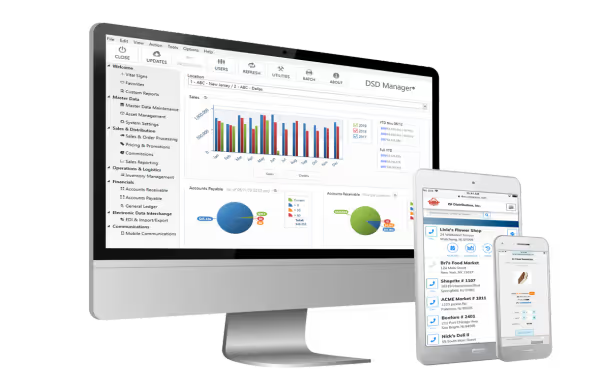
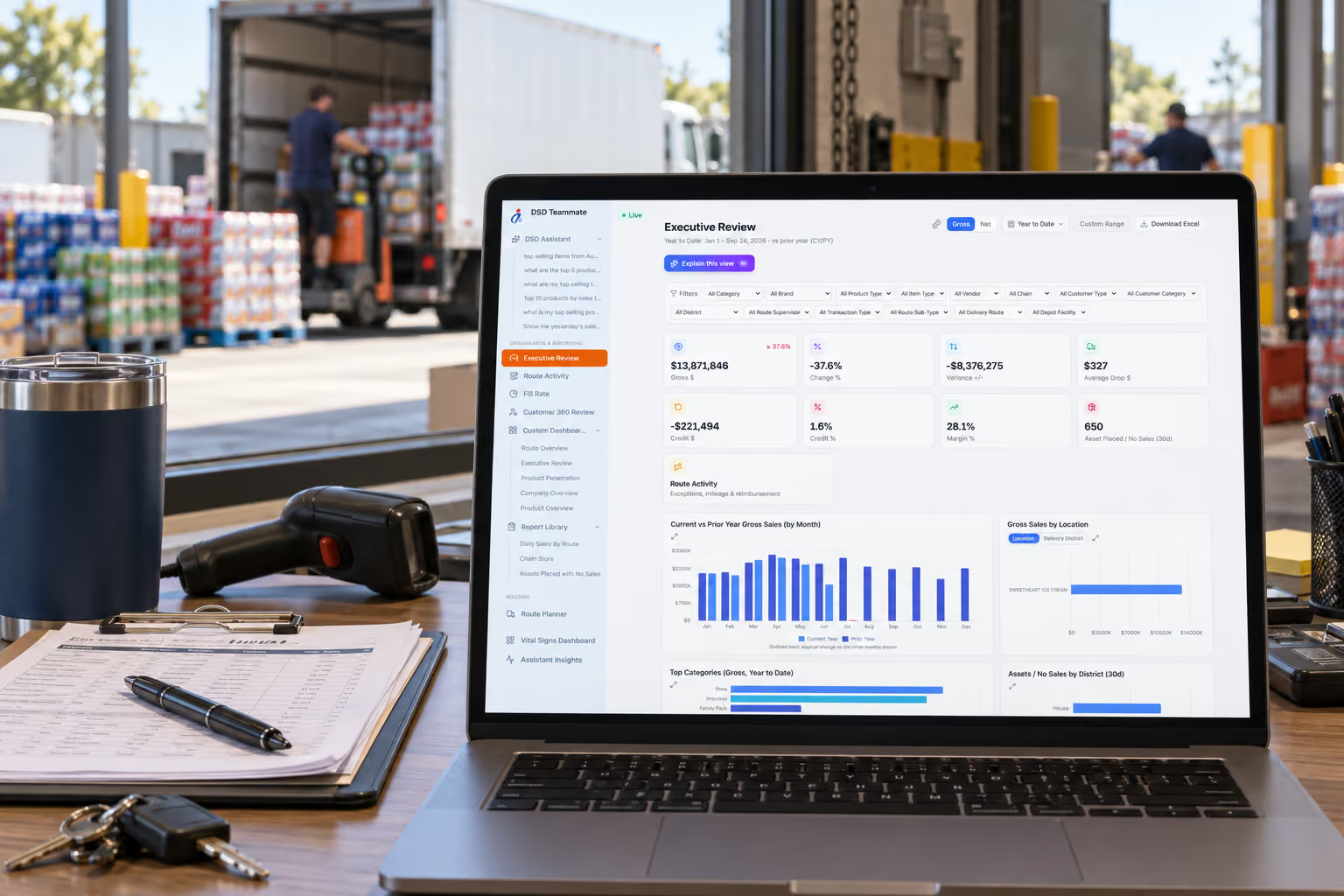
That is the kind of real-time, route-level visibility DSD Manager is built to provide.
If any of these five questions made you pause, it may be worth taking a closer look at where your operation is losing money on the route and how much faster your team could act with the right information in one place.
Streamline Your DSD


All Rights Reserved.