
Recent News
Beyond the Chain: How DSD Distributors Are Winning (and Losing) at the Corner Store
Introduction
Not every lost account announces itself with a complaint. Your driver pulls into an independent c-store he’s been servicing for three years. The order is smaller than last month’s. It was smaller the month before that, too. The owner is friendly, pays on time, and never complains. Nothing looks wrong.
Six months from now, that account will be gone. Not because of price. Not because of product. Because somewhere along the way, a competitor's driver started paying closer attention than yours did.
When DSD strategy gets discussed, chain accounts often get more airtime. That makes sense. The volume is concentrated, the orders are predictable, and the contracts are big enough to justify a meeting at headquarters. But a real share of your route margin lives somewhere else: the independent c-stores, the bodegas, the mom-and-pop groceries, the ethnic markets, the corner store that's been on the same block for thirty years.
To help you protect and grow your independent retail business, this article looks at what these retailers actually want, where distributors quietly lose ground, and how to increase share without putting unnecessary strain on your routes.
Why Independent Retail Still Drives Real Margin
Independent retail covers a lot of ground. There are independent convenience stores, bodegas, gas stations, neighborhood groceries, ethnic markets, and single-location shops that never show up in the big industry reports. These aren't one channel. They are several, each with its own buying patterns and rhythm.
In most DSD markets, these are the stores where new products are tested first, where regional brands hold their ground against national ones, and where day-to-day impulse-buy economics actually play out.
However, here's what often gets missed: when these accounts are managed well, per-stop margins beat those of chain businesses. There's no corporate machine eating into them, no mandated promo calendar, no authorized list capping what you can sell. The margin that's typically "squeezed out of you" at a chain account remains on the table here. And while no single independent moves chain-level volume, the math at the channel level tells a different story: add up the margin across an entire route of well-managed independents and the total can quietly outperform the chain accounts that get all the attention.
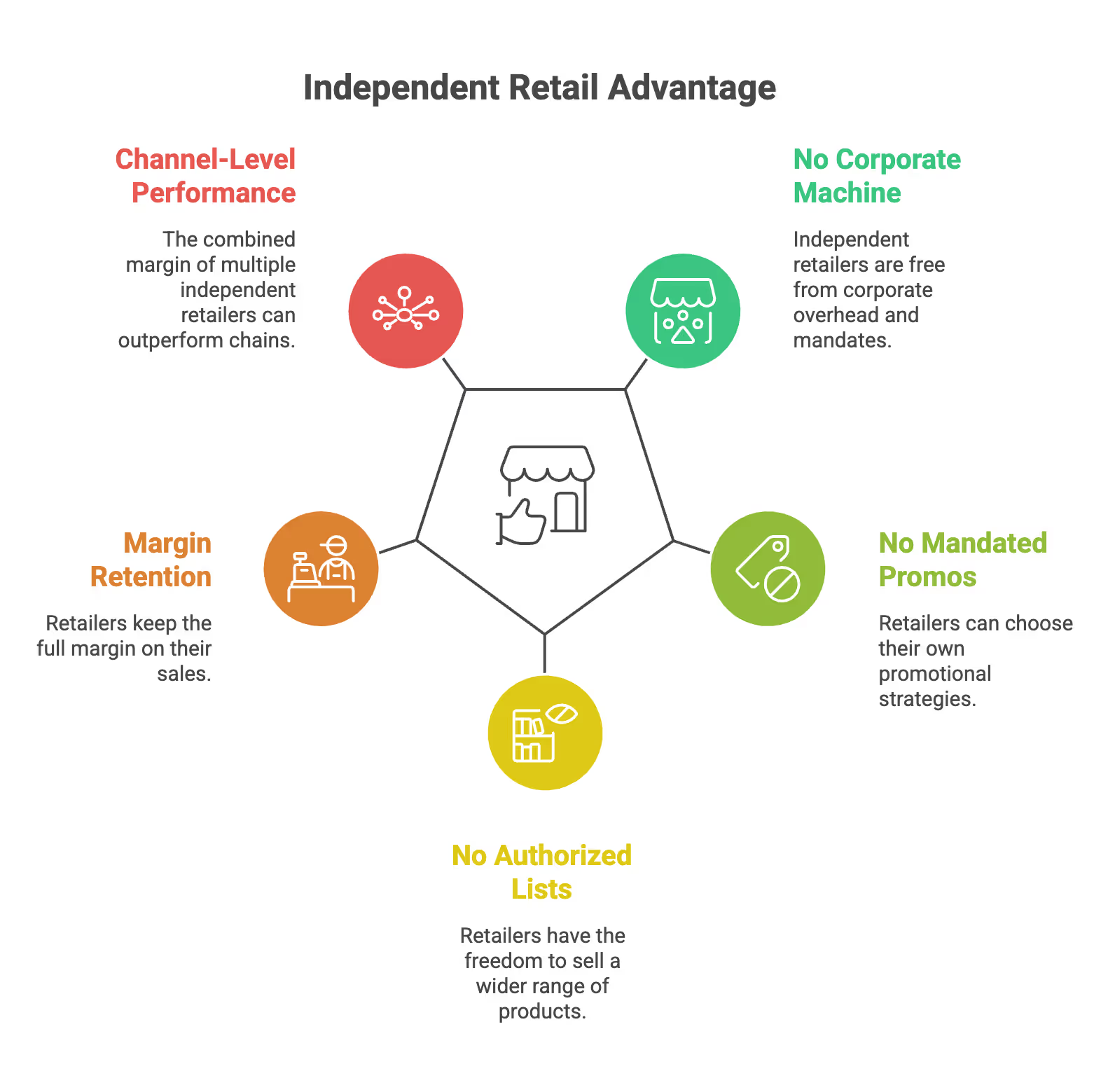
The way these independent accounts run is very different from a chain business:
- Orders are smaller and more frequent.
- Backroom space is tight or nonexistent. If it's not on the shelf, it's not in the store.
- Cash and checks are still common.
- The owner makes every decision, often in a two-minute conversation at the door.
That last point is what makes this channel its own discipline. The distributors who treat it that way are the ones who grow share. The ones who treat it like a smaller chain business tend to plateau.
What Independent Retailers Actually Want from Their DSD Partners
Most distributors assume independent retailers want the same things chain buyers do, just at a smaller scale. They don't. The list of what these owners actually care about is shorter than people think, and very little of it is about price.
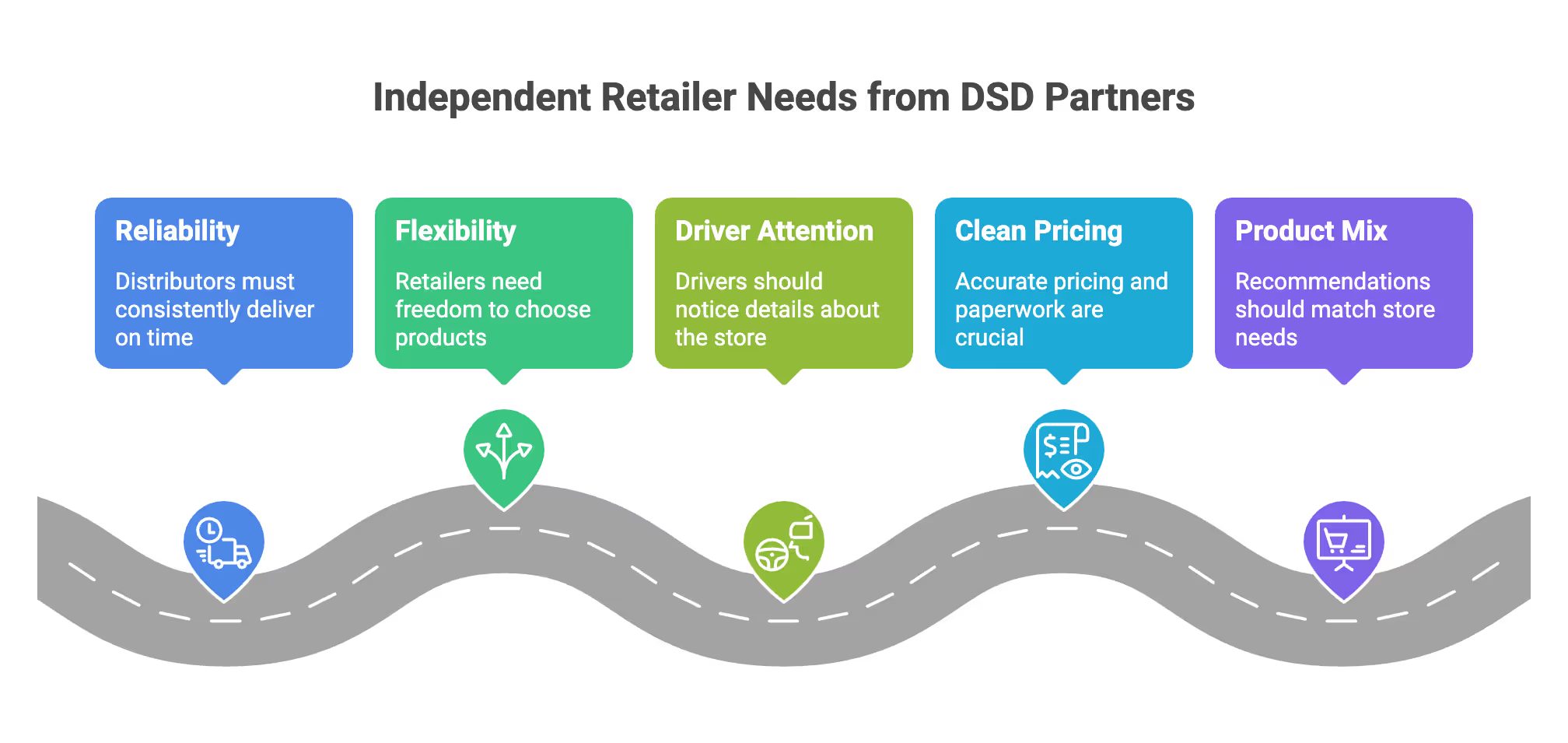
Reliability before anything else. Independents don't have buffer stock. A missed delivery isn't an inconvenience. It's an empty cooler on a Saturday. The distributors who win this channel are the ones who show up on the day they said, in the window they said, with the order they promised.
Flexibility on what they can carry. This is the biggest difference from chain accounts. There's no approved list dictating what they can and can't order. No corporate machine squeezing margin out of every SKU. That flexibility is the whole reason a lot of these owners stay independent in the first place.
It also cuts the other way, in your favor. Most independents will accept the program you offer them — your product mix, your pricing, your delivery schedule — as long as it makes sense for their store. That's a real advantage for the distributor who understands what actually sells in these accounts. The flip side: distributors who try to run these accounts like mini chains, with the same suggested order and the same promo push every visit, give up the one thing the channel actually offers.
A driver who pays attention. Notices the new sign in the window. Knows the owner's kid is back in school. Flags a slow-moving product before it goes stale. Mentions that the cooler door has been sticking. These types of details help to keep the account.
Clean pricing and clean paperwork. Independents notice every dollar. A pricing error a chain buyer would route through accounts payable and forget about is personal for an owner-operator. Unresolved credits and invoice disputes are the fastest way to lose one of these accounts. Not because the dollars are big, but because the trust isn't recoverable.
A product mix that fits the store. The recommendation that lands with an independent owner is not, “Here’s what the manufacturer is pushing this month.” It is, “Based on what’s been moving here, what your customers are buying, and what’s working at similar stores nearby, here’s what I’d bring in next time.” The right product mix should help the retailer sell more while also giving the distributor room for healthier margins. That is the win-win: less driven by a blanket promotion, and more focused on what actually makes sense for that store.
Where Distributors Quietly Lose Independent Accounts
The failures in this channel aren't dramatic. They're slow. And they tend to compound.
The most common one is to treat every independent as a small chain. Same suggested order template. Same delivery cadence. Same conversation at the door, regardless of what's actually happening in that specific store.
The second most common is the loss of institutional knowledge when a long-tenured driver leaves. A driver who's worked a route for eight years carries a mental map of every account. Which owner pays on time. Which one wants the order left in the back. Which one will quietly switch suppliers if you forget the holiday display. When that driver leaves and the replacement walks in cold, the relationship resets to zero. The accounts feel it right away.
Then there's the slow bleed:
- Small pricing errors and unresolved credits that pile up until the owner decides it's easier to switch than to keep arguing
- Stops that get skipped on tight days "because they're small," and the owner remembers exactly which day it was
- AR that keeps building on a store that's clearly winding down, because nobody on the route noticed the inventory thinning out and the lights going off earlier in the evening
Most of these aren't strategy problems. They're information problems.
Growing Share Without Burning Out Your Routes
The right question in independent retail usually isn't "should we add more accounts?" It's "how do we add the right ones without breaking the routes we already have?"
A few things tend to work.
Use stop-level data to find your best independents. Not just your highest-volume ones. Profitability per stop varies more in this channel than people expect. The best accounts often share characteristics, like neighborhood density, traffic patterns, and how long the owner has been there, that make them easier to find more of. Tip: review your stop-level data via the Product Sales Analysis report in DSD Manager.
Fit new stops into existing routes. Adding a strong independent to a route that already passes within two blocks is a very different decision than spinning up new drive time. This is where being able to find nearby accounts in your route planning makes a real difference. The math changes when you can immediately see which existing routes can accommodate a new stop without breaking the day. Tip: Use the Find Nearby feature in DSD Manager to help with this.
Give your drivers context at the door. Last-visit notes. Recent purchase history. Current promotions that actually fit that store. The two-minute conversation at the cooler is where share gets won or lost, and it goes a lot better when the driver isn't starting from scratch. Tip: Use the Notes feature in iOS Route Manager to save this important information.
Track success at the account level, not just the route. Route-level numbers will tell you a route is healthy, while a handful of independents on it are quietly declining. Stop-level visibility catches the trend before it turns into churn. Tip: The Route Management Report in DSD Manager will provide greater visibility into your routes.
Where the Right Tools Make a Difference
A lot of what makes independent retail work is operational discipline and human attention. But the margin for error is thinner here than in a chain business, and the right tools matter more than most operators give them credit for.
A few capabilities have outsized impact in this channel:
- Real-time route and inventory visibility, so drivers know what's on the truck and what's been delivered before they walk through the door.
- Customer-specific pricing that can be adjusted in the field, so small pricing disputes don't lead to churn.
- Account notes that stay with the customer, not with the driver, so a route changeover doesn't reset every relationship.
- Channel-level segmentation, so you can manage bodegas, gas stations, ethnic markets, and mom-and-pop groceries as the distinct channels they are — not lump them together as "independents."
- Stop-level profitability reporting, so you can see which independents are actually carrying the route and which ones are quietly eroding it.
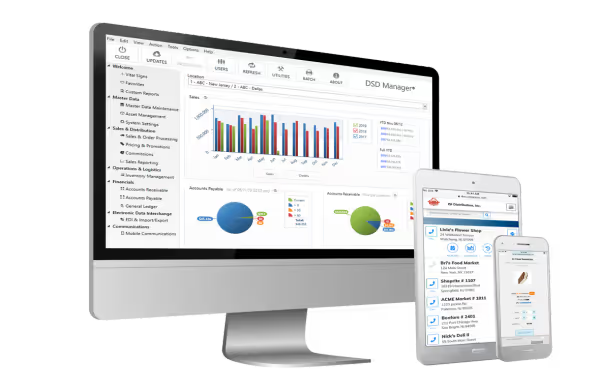
This is the kind of work DSD Manager is built for. Customer notes, customer-specific pricing, find-nearby route planning, channel segmentation with as much granularity as you need, and stop-level profitability reports are all part of the system — because the difference between winning and losing in independent retail usually comes down to one thing: whether the right information was in the right hands at the right moment.
Conclusion
Independent retail rewards attention. Chain accounts get the volume and the strategy meetings, but the corner store is often where the margin and the loyalty live.
The pattern is consistent across every distributor who does this well. They show up when they said they would. They give their independents the flexibility the channel actually offers. They protect institutional knowledge when drivers change. They keep their pricing and paperwork clean. They equip the people at the door with the information they need to make every stop feel personal.
The distributors who win independent retail aren't always the biggest. They're the ones who treat every stop like it matters, because in this channel, every stop does.
Streamline Your DSD


All Rights Reserved.