
Recent News
The "Small" Stops: When Servicing an Account Costs More Than It Earns
Introduction
Every route has one. It may be the corner store near the edge of the territory, ordering six cases most weeks and perhaps eight when business is good. The driver knows the owner, the account has been on the route for years, and no one has seriously questioned whether the stop still makes financial sense.
That question can feel uncomfortable. DSD businesses are often built on saying yes: yes to the new store, yes to the small first order, and yes to the customer who promises to grow.
But a customer can generate sales without turning a profit.
Once drive time, labor, fuel, credits, buybacks, and service frequency are factored in, the margin on a small order can disappear quickly. In some cases, the distributor may spend more to make the stop than the stop contributes to the business.
That does not mean every small customer should be removed. A small, quick stop located directly on the route may be highly profitable. A larger account that is remote, time-consuming, and return-heavy may not be.
The goal is to determine which stops pay their way, which do not, and what can be changed before a marginal account becomes a serious route constraint.
The Cost Not Shown on the Invoice
When evaluating an account, it’s easy to focus on the order. A $400 invoice with a reasonable product margin may seem worthwhile. But the invoice shows only what was sold. It does not show the total cost of making the sale.
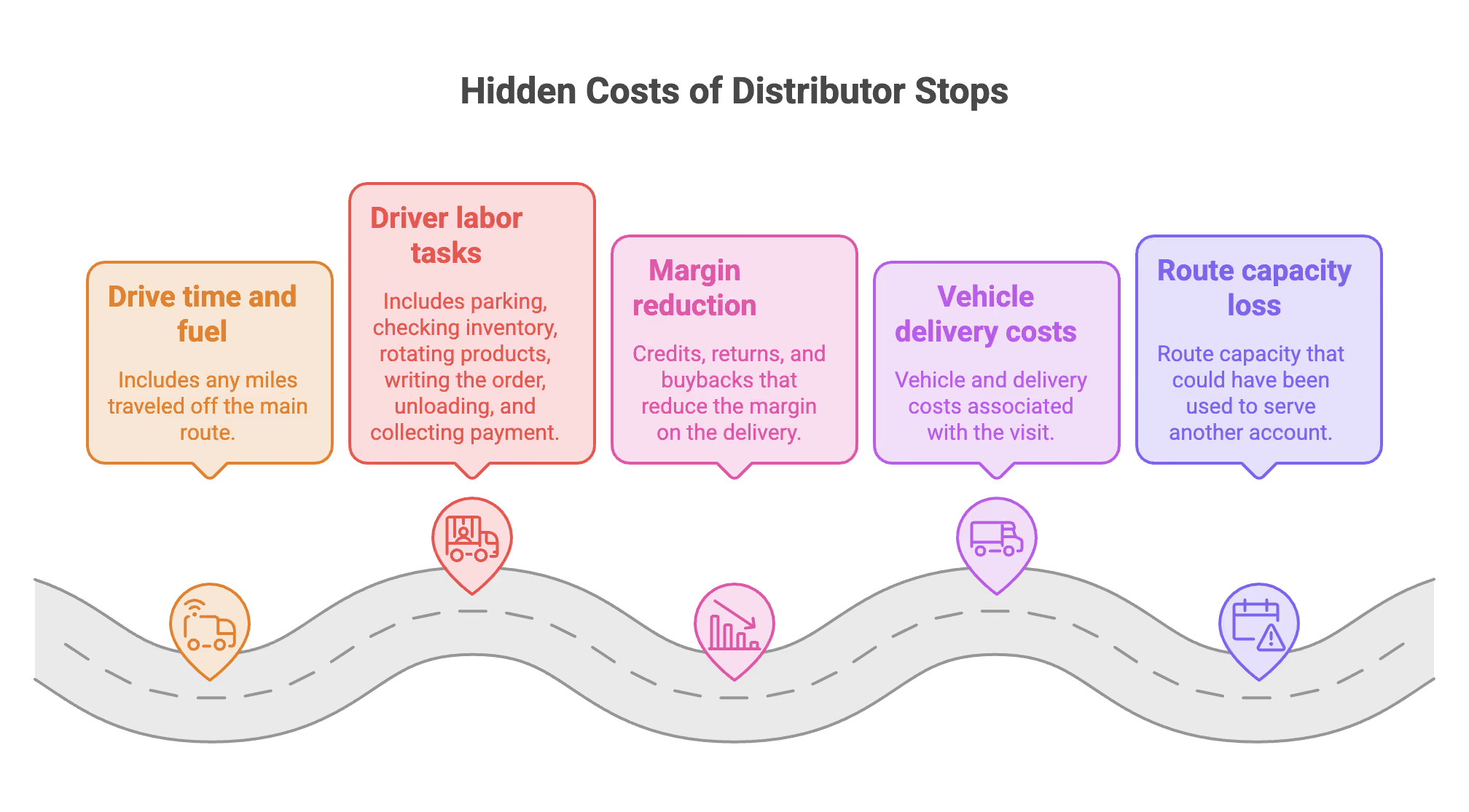
Before the truck leaves the stop, the distributor may have absorbed:
- Drive time and fuel, including any miles traveled off the main route
- Driver labor for parking, checking inventory, rotating products, writing the order, unloading, and collecting payment
- Credits, returns, and buybacks that reduce the margin on the delivery
- Vehicle and delivery costs associated with the visit
- Route capacity that could have been used to serve another account
This is why sales per account can be misleading.
Consider two stops. The first one has an $800 invoice but requires ten minutes of off-route travel in each direction and 25 minutes of service time. The second is a $400 invoice, but it is directly on the route, takes five minutes to service, and rarely generates a credit.
The smaller invoice may yield a better return.
A helpful way to think about the calculation is:
Contribution per stop = gross margin dollars – credits and buybacks – estimated delivery and service cost
The exact calculation varies by distributor, but the principle remains the same: an account should be judged by what is left after it is served, not simply by what appears on the invoice.
How Unprofitable Stops Accumulate
Few distributors intentionally create routes filled with inefficient accounts. The problem usually develops one reasonable decision at a time.
A store requests to be added to the route. The initial order is small, but the location is close enough, and the account may grow. Later, another store is added as a favor to a manufacturer's representative. A third account opens just outside the normal territory.
Each decision seems manageable on its own.
Over time, however, routes tend to expand without being reevaluated. Stops are added far more often than they are changed or removed. A route that once had 15 well-positioned accounts may eventually have 25 stops, many of which were added without considering their combined impact on drive time, labor, and capacity.
The route day becomes longer, but the financial return does not increase at the same rate.
The problem becomes especially clear during peak season. When trucks, drivers, and delivery windows are already stretched thin, a stop that takes 25 minutes and barely breaks even is no longer just a minor inefficiency. It may keep the route from adding another delivery to a growing account or force the driver into overtime.
At that point, the cost of the stop is not limited to its own margin. It also includes the business the route no longer has room to serve.
What to Measure at the Account Level
Route managers often know which accounts are difficult or inefficient. That experience is valuable, but major service decisions should rely on more than instinct.
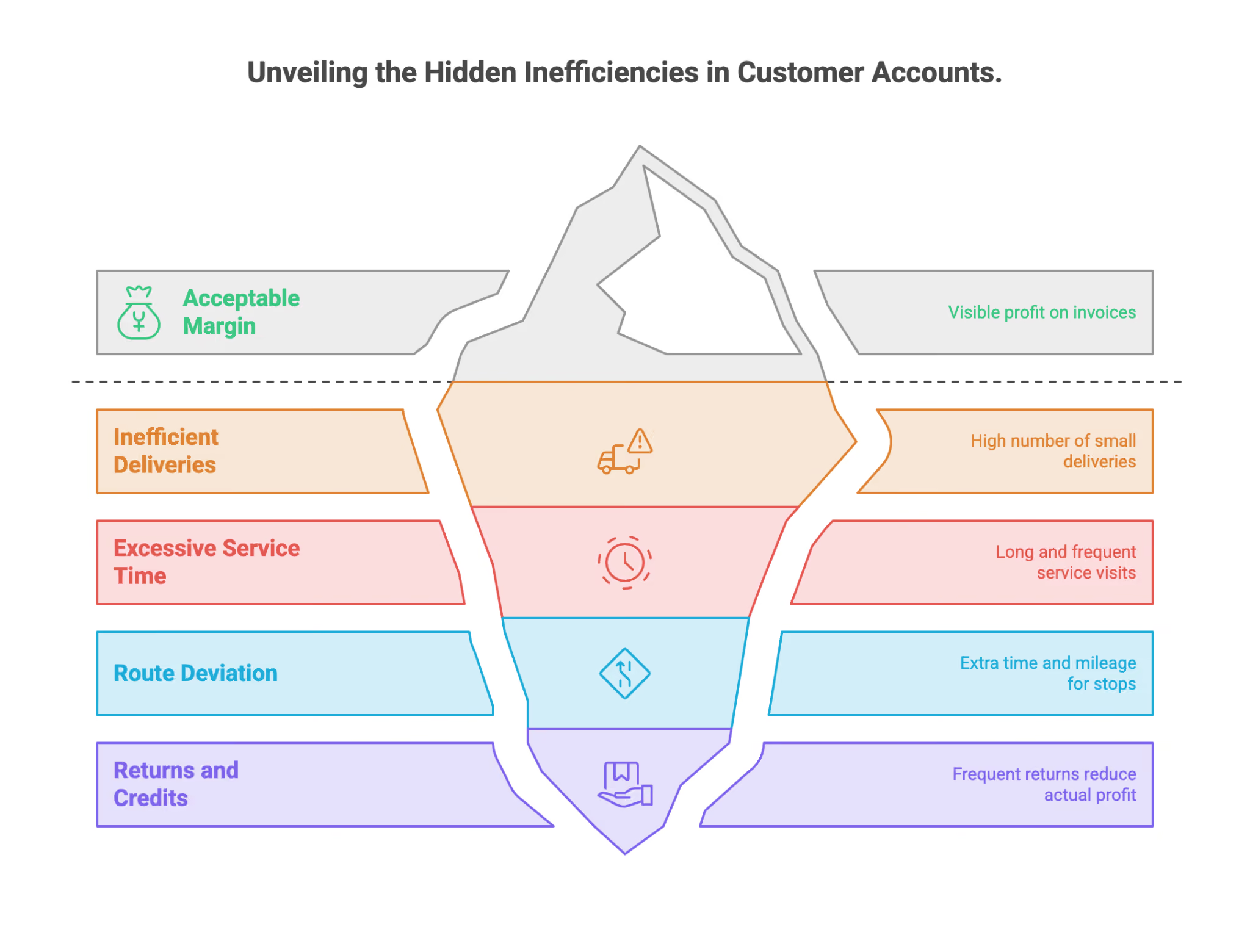
To evaluate an account fairly, consider the following four factors together.
Margin per visit
Measure the gross margin dollars generated each time the truck stops, rather than focusing only on total monthly or annual sales.
An account with respectable annual revenue may still be inefficient if it requires too many small deliveries to generate that revenue.
Service time and frequency
How long is the stop, and how often is it visited?
An account receiving weekly service may maintain the same total volume by receiving a larger delivery every other week. Removing unnecessary visits can significantly improve the account’s contribution.
Distance from the planned route
A stop a few miles away may look close on a map, but it can still add significant time when the truck has to leave the route and then return.
The relevant number is not just the account’s distance from the warehouse. It is the extra time and mileage added by including it in that day’s route.
Credits, returns, and buybacks
An invoice may appear to have an acceptable margin until returns are accounted for. Accounts with frequent credits or weak product movement can quietly consume much of the profit they seem to generate.
Viewed separately, none of these figures tell the whole story. Viewed together, they show whether an account makes a reasonable contribution for the time and capacity it requires.
Making the Numbers Easier to See
The challenge for many distributors is not a lack of information. It’s that the information often lives in different reports or systems.
Sales and margin may appear in one report, while credits and buybacks appear in another. Service frequency may be stored elsewhere, and route time and account location are understood primarily by drivers and route managers.
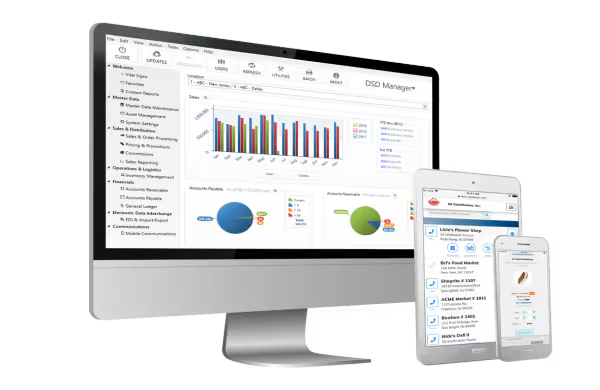
DSD Manager brings these signals together, helping operators evaluate route and account performance more clearly.
Instead of looking at sales alone, managers can take a fuller view by comparing account performance, service patterns, and other profitability indicators. They can identify accounts that need closer review, rank stops by performance, and determine whether an apparent problem stems from low volume, excessive service frequency, returns, route placement, or a combination of factors.
How to Improve a Stop That Is Losing Money
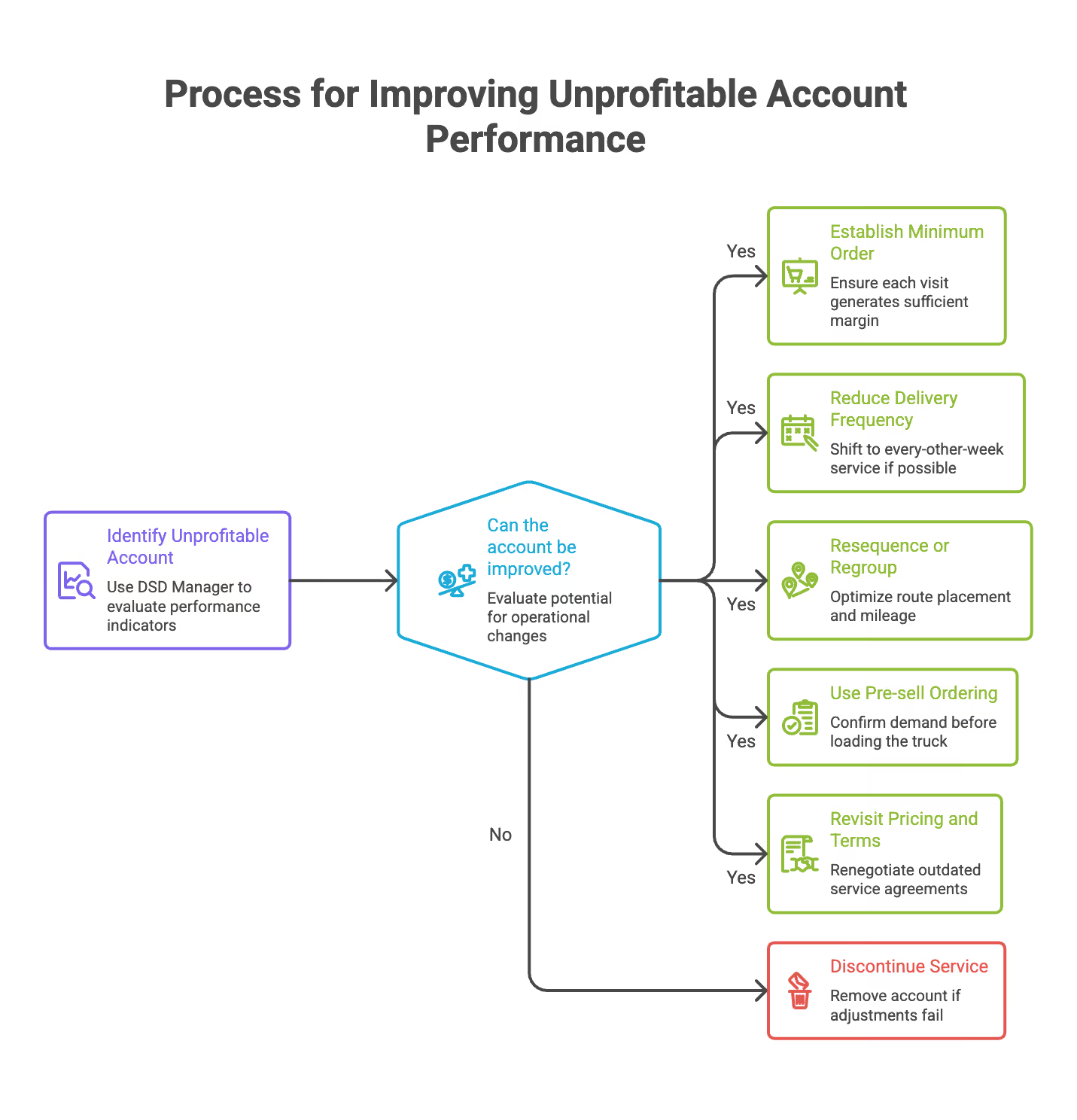
Identifying an unprofitable account does not automatically mean removing it from the route. In many cases, a single operational change can improve economics while preserving the customer relationship.
Establish a minimum order
A minimum delivery amount helps ensure that each visit generates enough margin to justify the service cost.
A customer ordering six cases every week may be able to order twelve cases every other week, provided the store has sufficient demand and storage capacity.
Reduce delivery frequency
Not every account needs weekly service.
Moving a slower account to an every-other-week service can eliminate one of every two visits while still allowing the distributor to retain the customer. The decision should also take into account shelf life, storage space, inventory turns, and the potential for credits or buybacks.
Resequence or regroup the stop
The account itself may not be the problem. Its location within the route may be creating unnecessary mileage.
Moving the stop to a different day, serving it from another route, or grouping it with nearby accounts may reduce costs without changing the customer’s order.
Use pre-sell or advance ordering
Taking orders before delivery can reduce the time spent checking inventory and writing the order in the store. It also lets the distributor load the truck and plan the route around confirmed demand.
Revisit pricing and terms
Some accounts operate under pricing, discounts, delivery expectations, or credit terms set years earlier.
When those arrangements no longer cover the cost of service, the distributor may need to renegotiate them. Account-level data makes that conversation more objective and easier to explain.
Discontinue service only when necessary
If the account remains unprofitable after reasonable adjustments, removing it may be the appropriate decision.
Even then, the choice should be based on measurable economics rather than frustration or assumptions.
Communicating Changes to the Customer
Changes to order minimums or delivery schedules should be framed as efforts to maintain reliable service, not as punishment for being a small customer.
For example:
“To continue providing reliable delivery to your location, we are updating our minimum delivery amount. Based on your current volume, we can also offer an every-other-week schedule that may work better for your store.”
Giving the customer a choice can help preserve the relationship:
- Maintain weekly delivery by meeting the new minimum
- Switch to a less frequent delivery schedule
- Use an advance-order or alternative service option when available
The goal is to find a service model that works for both parties.
Review the Route Regularly
Account profitability should not be evaluated only after a route becomes overloaded.
Customer volume, product mix, returns, labor costs, and route density all change over time. A profitable account can become marginal, while a small account can grow into one of the route’s strongest stops.
Reviewing account-level performance quarterly, before peak season, or whenever routes are rebalanced can help identify problems while there is still time to correct them.
Conclusion
A route has a limited number of hours, miles, and delivery opportunities each day. Each stop uses up some of that capacity. Some smaller stops will easily justify their place. Others may become profitable with a higher minimum, less frequent deliveries, or a better position on the route. And a few may no longer make sense to serve.
The goal is to make better use of account- and route-level data to decide which stops to keep as they are, which to adjust, and which may no longer belong on the route.
DSD Manager helps operators see route and account profitability more clearly, so they can adjust service, protect capacity, and direct resources toward the customers and opportunities that offer the strongest return.
Want a clearer view of which stops are strengthening your routes and which may be consuming more than they contribute? Schedule a DSD Manager demo to see how account- and route-level reporting can support better service decisions.
Streamline Your DSD


.avif)
All Rights Reserved.