Recent News
What Makes a Top Performing DSD Employee?
Introduction
Two drivers can run similar routes, in similar trucks, carrying the same products, and produce very different results. One route grows steadily. Returns stay under control. Reorders happen when they should. Problems with an account are caught early.
On another route, credits creep upward, shelves lose facings, reorder opportunities are missed, and account problems go unnoticed until someone complains.
The difference is rarely just the truck, territory, or product mix. It is often the person running the route.
Experienced DSD operators already know how much a strong employee can influence an account. An important question to consider is what exactly makes that employee so effective and whether those qualities can be developed in others.
While experience certainly matters, top DSD employees are not simply born with a special instinct for the job. Much of what separates them comes down to a combination of ownership, observation, judgment, and the ability to turn information into action.
Fortunately, those qualities can be coached. And with the right processes and systems, the knowledge behind them can also be preserved and passed on.
Top Employees Take Ownership of the Stop
An average driver may judge a successful stop by whether the correct product was delivered and the paperwork was completed. A top performer looks at the account more broadly:
- They notice that a competitor gained two facings.
- They see that a product has barely moved since the last visit.
- They recognize that the cooler is emptier than expected or that a display has been moved to a weaker location.
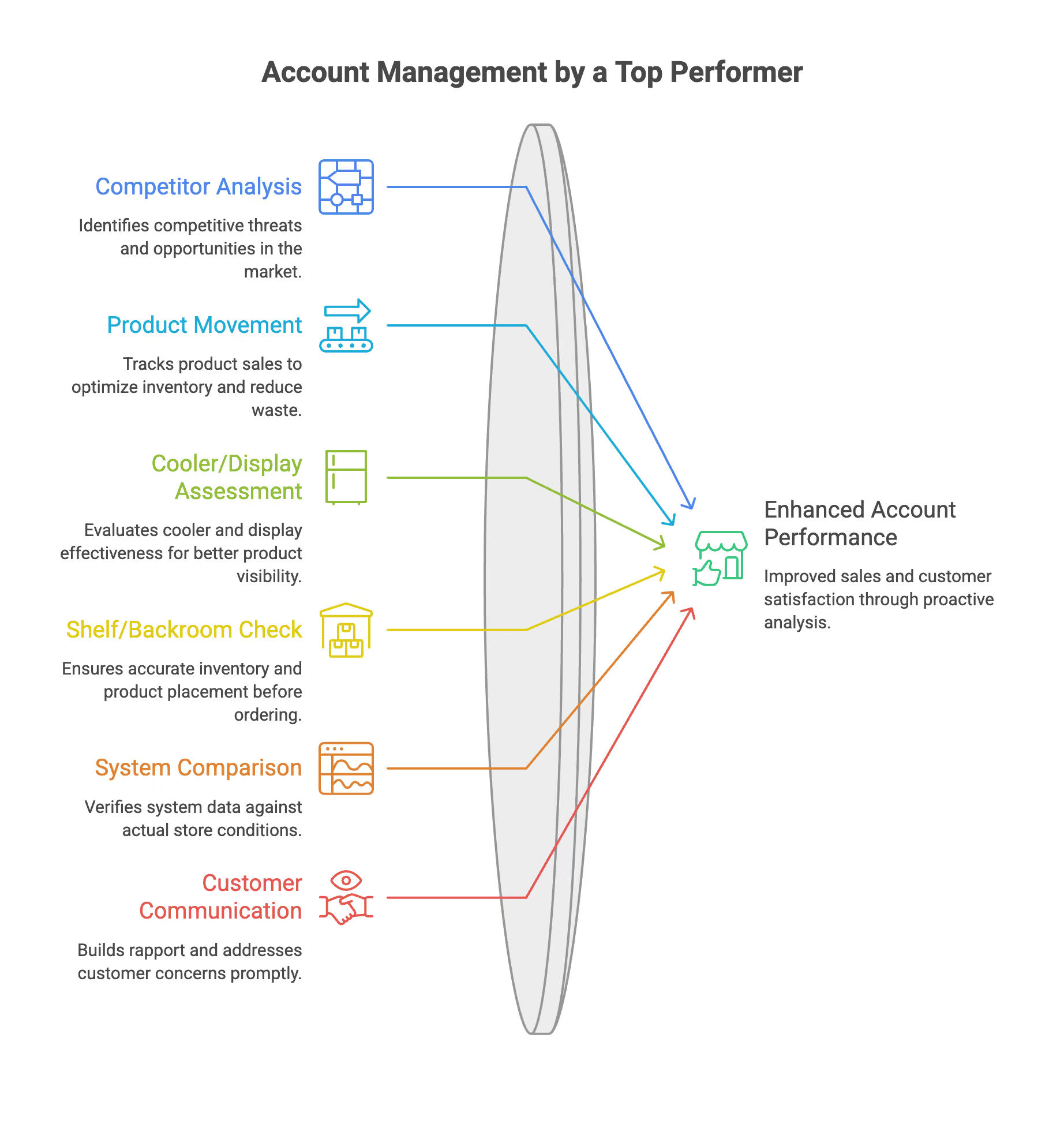
They are not simply delivering to the account. They are paying attention to how the account is performing. That usually shows up in a few consistent habits:
- They check the shelf, cooler, freezer, or backroom before finalizing an order.
- They compare what they see with what the system suggests.
- They notice changes in product movement, displays, competition, and customer behavior.
- They identify slow-moving products before they become returns or credits.
- They communicate with the customer when something looks unusual.
Consider a convenience store heading into a hot summer weekend. The suggested order may look normal based on recent history. But the driver notices that the freezer is unusually empty because sales were much stronger than expected during the previous week.
A purely transactional approach would be to deliver the suggested quantity and move on. A strong route employee recognizes the opportunity, adjusts appropriately, and helps the account avoid running short during another busy weekend.
That is ownership. The employee is not only asking, “Did I complete the delivery?” They are asking, “What does this account need from me today and for the next delivery?”
They Make Better Judgment Calls
Paying attention is only the first step. The employee then has to decide what to do with what they see. DSD is full of decisions that cannot always wait for a manager:
- Should you add another case, given that demand appears to be increasing?
- Should you reduce an order because the account already has too much inventory?
- Does a smaller stop deserve a few extra minutes today because something has changed?
- Should you follow the suggested order, or does the situation in front of you justify an adjustment?
Procedures and suggested orders provide an important starting point. But they cannot anticipate every account, season, promotion, customer preference, or competitive change.
That is where judgment matters. Experienced employees develop it through pattern recognition.
They learn that one convenience store consistently sells far more product before holiday weekends. They remember that another customer tends to over-order during certain periods and then return product several weeks later. They know which accounts require additional attention and which ones can be serviced quickly without sacrificing results.
Over time, numerous small observations become practical knowledge. The strongest employees use that knowledge to recognize when a standard rule applies and when the situation before them is different.
That kind of judgment takes time to develop, but it is not mysterious. It grows from experience, feedback, good information, and repeated exposure to the same accounts and situations. Which means managers can help employees develop it faster.
Top Performers Turn Information Into Action
Most modern DSD employees have access to a significant amount of information:
- Order history
- Product movement
- Inventory
- Pricing
- Customer notes
- Returns
- Credits
- Route activity
The difference between an average employee and a top performer is not always access to more data. It is what they do with it. A less experienced employee may look at a suggested order, accept it, and move on. A stronger employee asks questions like:
- Why has movement declined for the past three cycles?
- Why is this item repeatedly being returned?
- Does today's order make sense compared with recent sales?
- Is the pricing consistent with what the customer expects?
- Has this account's purchasing pattern changed?
The data becomes a way to understand what is happening at the account rather than simply another screen to work through. That can lead to small corrections that produce meaningful results over time:
- catching a declining account before it becomes a lost account
- reducing an item before excess inventory becomes a return
- spotting an unusual order while it is still easy to investigate
- correcting a pricing issue before it becomes a larger dispute
- identifying a sales opportunity before a competitor does
Top performers frequently set themselves apart through these small decisions rather than a single dramatic success. The advantage compounds one stop and one cycle at a time.
They Know the Account, Not Just the Route
One of the most valuable things a top-performing DSD employee develops is context. A veteran route employee may know that a certain manager prefers deliveries earlier in the morning. Another account may regularly need additional product before a local event. One store may have limited backroom space. Another may sell through a particular flavor much faster than the numbers initially suggest.
Those details matter. But they also create a risk.
If important account knowledge exists only in one employee's memory, the business becomes dependent on that employee remaining on the route. Eventually, someone retires, changes jobs, gets promoted, takes time off, or moves to another territory.
The route remains, but the experience does not necessarily remain with it. That is why strong DSD operations do more than develop knowledgeable employees. They also create ways to preserve the knowledge that those employees accumulate.
Capture What Your Best Employees Know
A two-day ride-along can teach a replacement where the accounts are. It cannot transfer ten or twenty years of accumulated account knowledge. That requires an ongoing process.
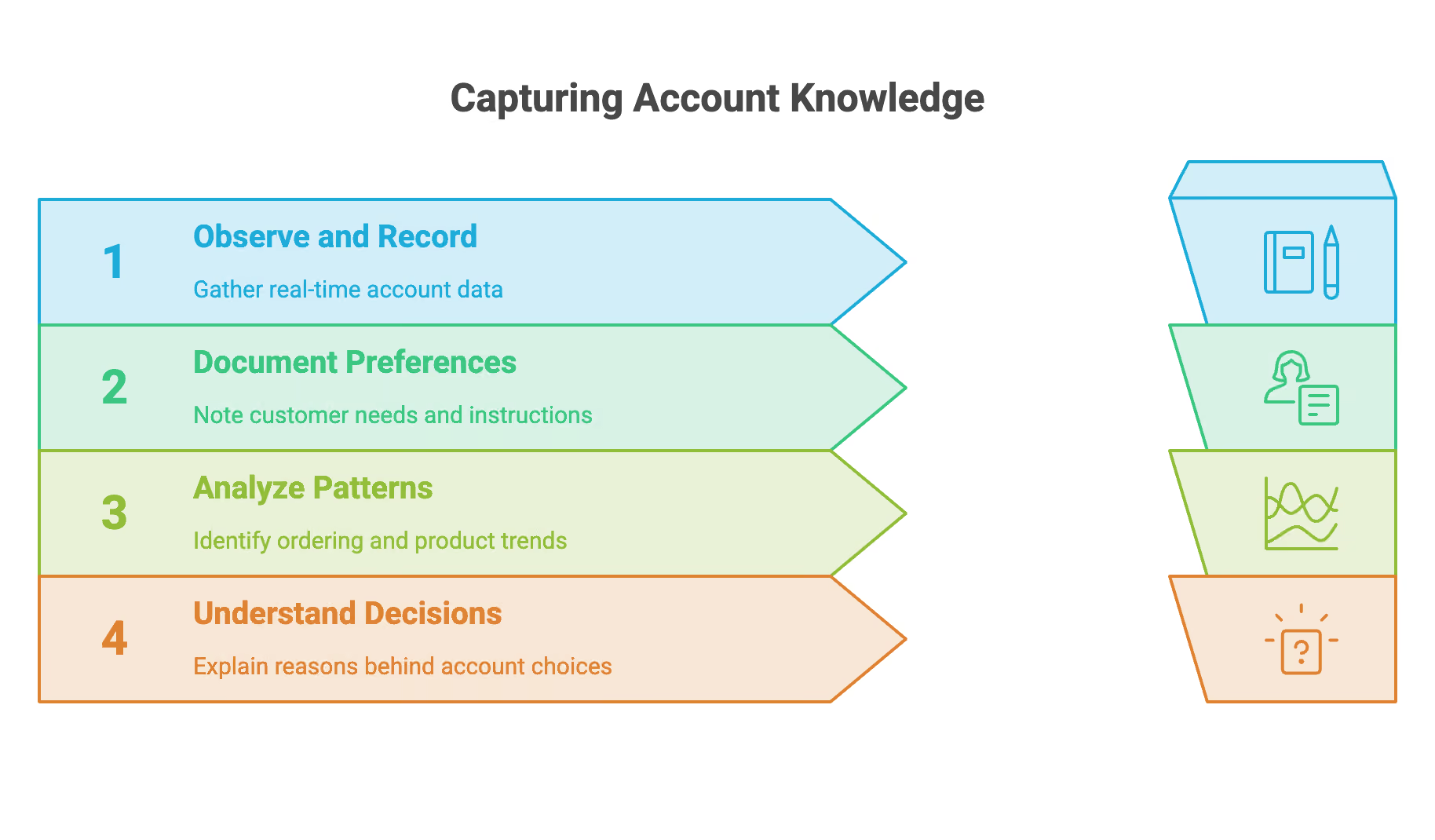
Useful information should be captured while employees are working the route, not reconstructed when they leave. That might include:
- customer preferences and special instructions
- account notes
- ordering patterns
- product movement history
- recurring seasonal changes
- route sequencing
- delivery considerations
- and the reasons behind unusual account decisions
This does not mean trying to document every instinct a veteran employee has ever developed. The goal is to make important operational knowledge available to the next person who needs it. That becomes much easier when customer history, route activity, ordering information, inventory, and notes are connected within the same system.
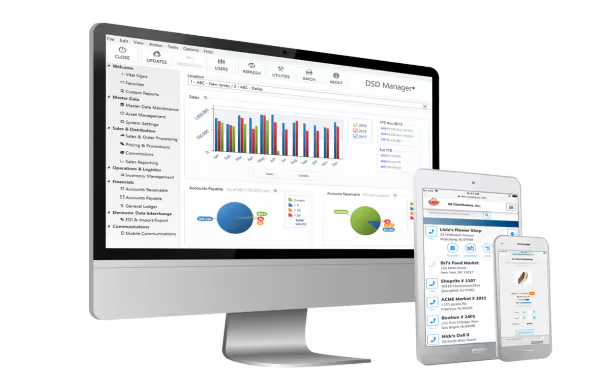
With DSD Manager, for example, account and route information can remain with the business rather than being scattered across separate tools, handwritten notes, or individual memory:
- Real-time route and inventory visibility can help supervisors and replacement drivers understand what is happening without relying entirely on the regular employee.
- Account notes can preserve customer preferences and important history.
- Reporting and movement information can help a new employee identify patterns that might otherwise take months or years to discover independently.
Technology does not replace experience. It preserves it.
How to Develop More Top Performers
Identifying your strongest employees is useful. Developing more employees like them is better. Several management practices can help accelerate that process.
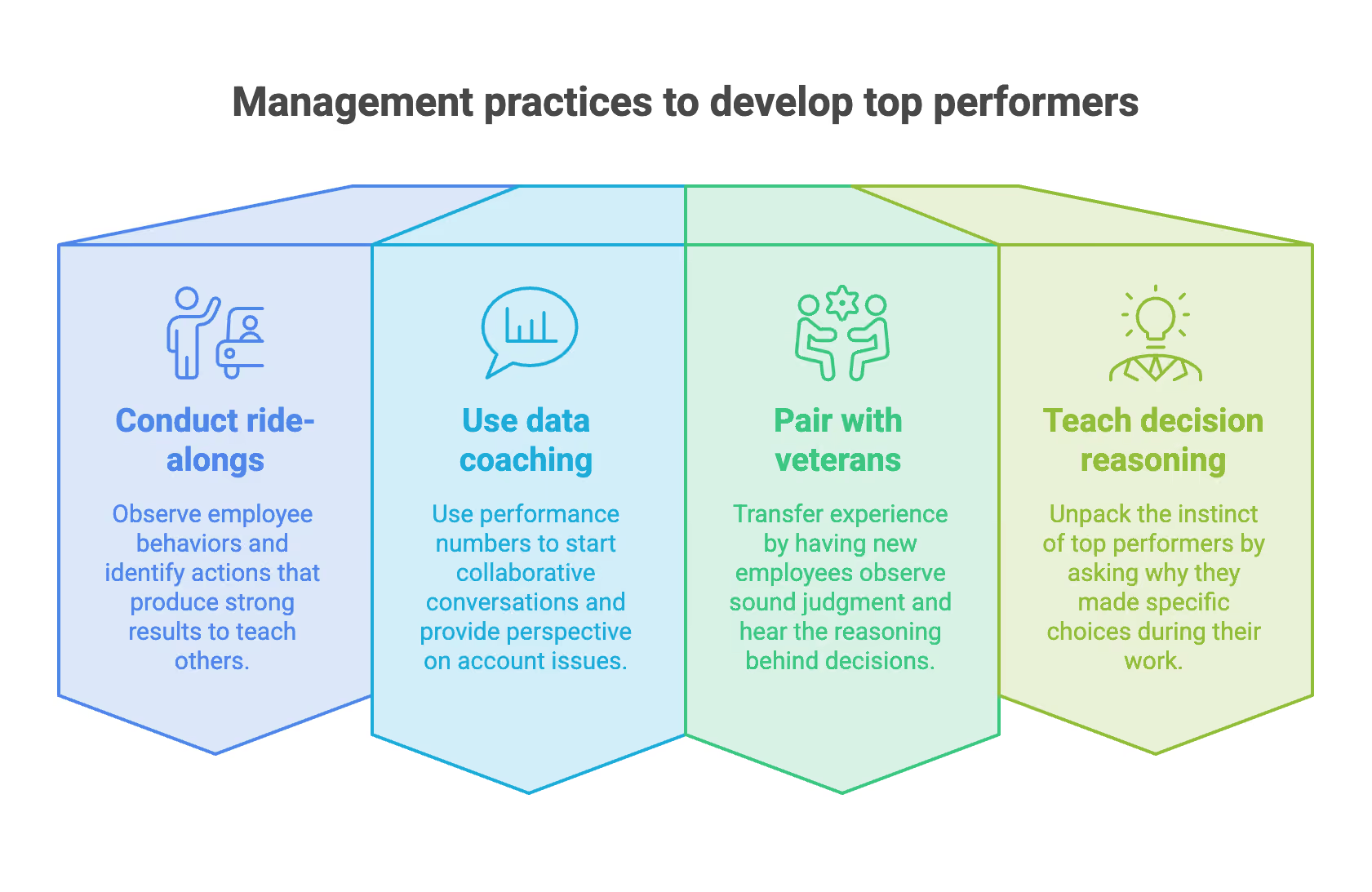
Ride along to learn, not only to inspect
A ride-along is one of the best ways to see how an employee actually approaches the route. Watch what they look at before placing an order. Notice which questions they ask customers. Pay attention to how they handle exceptions. Just as importantly, ride with your top performers.
The objective should not simply be finding mistakes. It should also be identifying the behaviors that produce strong results so those behaviors can be taught to others.
Use data to start coaching conversations
Numbers can identify where a conversation is needed. If returns suddenly rise at three accounts, the first question does not necessarily have to be, “Why are your returns too high?” A better starting point may be:
“Returns increased at these three stops. What are you seeing there?”
That turns reporting into a coaching tool rather than simply a scorecard. The employee provides context. The manager provides perspective. Together, they can identify what needs to change.
Pair less-experienced employees with veterans
Experience transfers more quickly when employees can observe sound judgment in real-world situations. A new employee may learn more from watching an experienced driver handle twenty actual account decisions than from reading twenty pages of procedures.
The key is to make the reasoning visible. Do not only show the new employee what the veteran does. Ask the veteran to explain why.
Teach the reasoning behind the decision
Top performers sometimes describe their best decisions as instinct. Managers should try to unpack that instinct:
- Why did you reduce that order?
- Why did you spend extra time at this account?
- What made you check that display?
- Why did you question the suggested quantity?
Once the reasoning is articulated, it becomes teachable. That is how individual experience gradually becomes organizational knowledge.
Give Good Employees Better Visibility
Managers also need the ability to recognize strong performance. That can be difficult when the only thing being reviewed is the final route total.
Two employees may produce similar sales numbers while managing their territories very differently. One may prevent returns, protect facings, keep inventory aligned with demand, and catch account problems early. Another may simply be benefiting from a stronger territory.
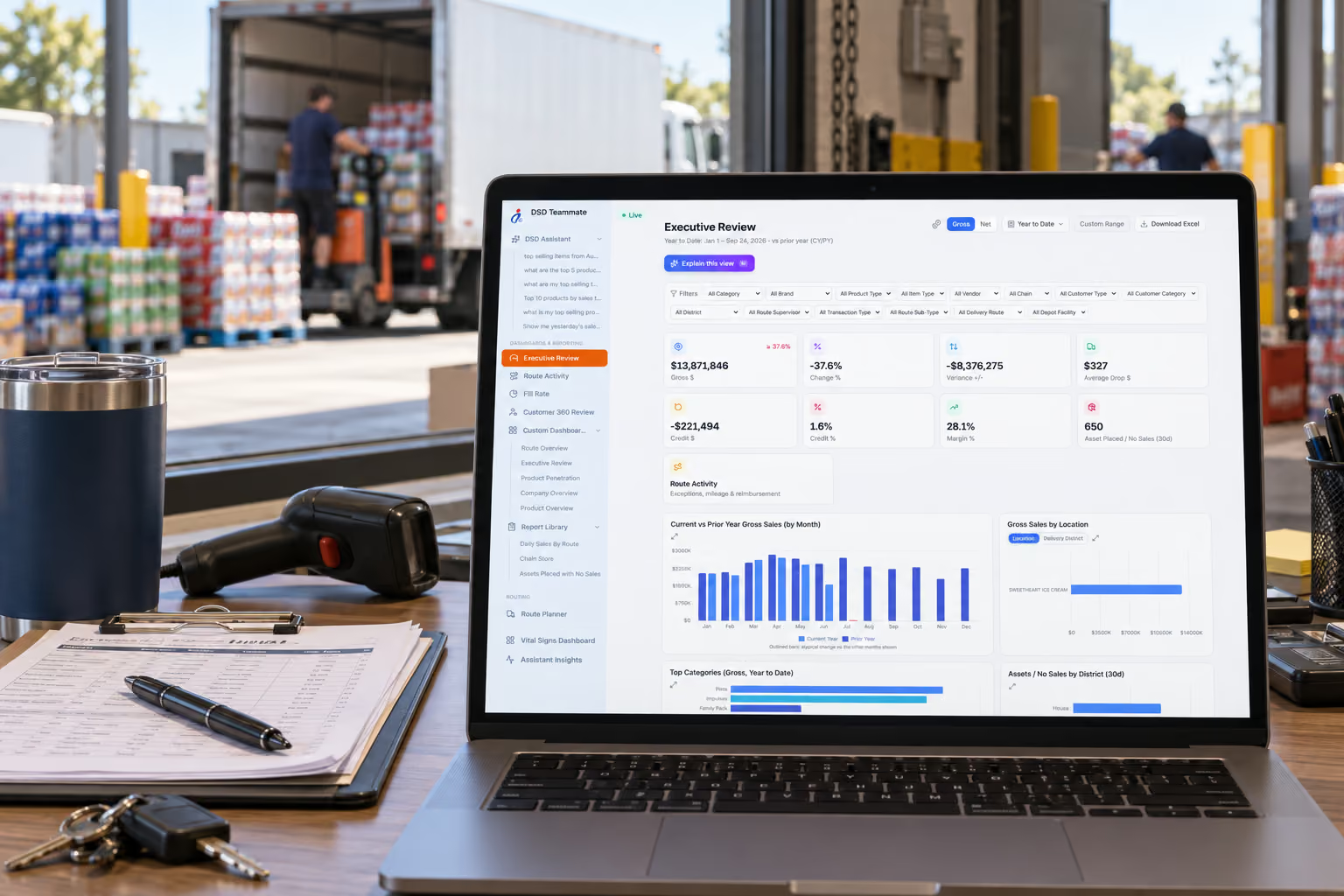
Better operational visibility helps managers see the difference. Account trends, movement history, credits, returns, route activity, and customer information provide context around the final number.
That makes coaching more specific and helps identify which employees are consistently making good decisions. The system does not tell you who your best people are on its own. But it can make their good habits much easier to see.
Conclusion
The best DSD employees do more than complete the route. They take ownership of the accounts they serve. They notice changes other people overlook. They make good decisions with imperfect information. And they use the data available to them to act before small problems become expensive ones.
Those abilities grow stronger with experience, but that experience does not have to remain locked within one employee. Managers can accelerate development through ride-alongs, coaching, mentoring, and by making the reasoning behind good decisions explicit. At the same time, the right technology can preserve account history, route knowledge, and operating information so the next employee does not have to start from scratch.
That is an important distinction. The goal is not to use technology to replace the judgment of your best employees. It is to help more employees develop that judgment and make sure the knowledge they create stays with the business.
DSD Manager gives distributors the route, account, inventory, and reporting visibility needed to support better decisions across the team. If you want to see how it can help your employees work with better information and preserve valuable route knowledge, schedule a demonstration.
Streamline Your DSD

.avif)
All Rights Reserved.